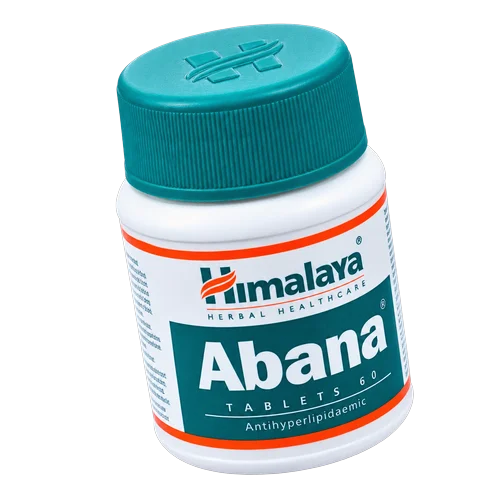
I used Abana at the advised dose alongside dietary changes for about eight weeks. I did not feel a dramatic difference, but my routine became more consistent. I still needed blood testing because there was no way to judge cholesterol by symptoms.
Jebel Ali About eight weeks 30 Sep 2026
Abana
Adults seeking nutritional support for lipid management and cardiovascular wellbeing may consider Abana, an herbal tablet formulation labelled for antihyperlipidemic use. It is intended to complement…
Adults seeking nutritional support for lipid management and cardiovascular wellbeing may consider Abana, an herbal tablet formulation labelled for antihyperlipidemic use. It is intended to complement heart-healthy habits, not replace treatment for diagnosed high cholesterol, hypertension, chest pain, or other cardiovascular disease.
Overview
Abana is supplied as tablets in a bottle and is positioned as a cardiovascular-support supplement. Its intended role is to support normal lipid metabolism and vascular health within a broader plan that includes balanced nutrition, physical activity, blood-pressure monitoring, and clinically appropriate treatment.
The term “antihyperlipidemic” refers to support related to elevated blood lipids, including cholesterol and triglycerides. High lipid levels often produce no symptoms, so Abana should not be used to judge whether cholesterol has improved by how a person feels. A blood test remains the meaningful way to assess lipid status. Follow-up testing provides objective evidence. Clinicians interpret those results alongside cardiovascular risk and the person’s treatment plan.
Primary uses
Abana may be considered as supportive care for adults focused on:
- Maintaining healthier lipid patterns alongside dietary changes.
- Supporting long-term cardiovascular wellness.
- Complementing exercise, weight management, and reduced intake of saturated fat.
- Following a clinician-directed plan for cholesterol or triglyceride monitoring.
- Supporting a structured wellness routine when no contraindication applies.
The World Health Organization describes cardiovascular disease as a major group of conditions involving the heart and blood vessels, with tobacco exposure, physical inactivity, unhealthy diet, raised blood pressure, raised blood lipids, and obesity among relevant risk factors [1]. A supplement cannot correct every one of these factors.
What it is used for
Abana is associated with support for lipid-related cardiovascular goals. That description does not establish that it lowers LDL cholesterol by a predictable amount in every user. Prescription lipid-lowering therapy has defined active substances, dosing schedules, monitoring requirements, and clinical outcome evidence that should not be assumed for a multi-herbal supplement.
A clinician may consider a supplement such as Abana in the context of:
- Mild lipid concerns being managed with lifestyle measures.
- A person who is tracking cholesterol but is not replacing prescribed treatment.
- A broader plan involving diet, exercise, smoking cessation, sleep, and blood-pressure control.
- A need to discuss complementary products before starting or changing therapy.
The National Institute for Health and Care Excellence recommends assessing cardiovascular risk and using validated lipid measurements when making treatment decisions [3]. A supplement should not be used to postpone assessment after an abnormal cholesterol result.
Expected benefits and limits
It should not be relied upon to:
- Treat acute chest pain or suspected heart attack.
- Replace a prescribed statin or another lipid-lowering medicine.
- Control severe hypertension.
- Prevent a clot during a high-risk period.
- Treat heart failure, angina, or a diagnosed rhythm disorder.
- Confirm that cholesterol has returned to a target range.
A bottle of tablets does not replace a lipid panel.
Formulation
Botanical supplements can vary in extract strength, plant part, preparation method, and standardisation. Those details influence pharmacological activity and interaction risk. The European Medicines Agency explains that herbal medicinal products require attention to identity, quality, dosage form, and preparation because two products based on a similar plant name may not have equivalent exposure [2].
The practical implication is simple: Abana should be treated as a biologically active herbal product, not as an inert food. People using medicines for cholesterol, blood pressure, diabetes, clot prevention, or heart rhythm need an interaction review before adding it.
Mechanism of action
Abana is positioned as a cardiovascular-support supplement intended to support normal lipid metabolism and vascular health. Its role is complementary and should be considered alongside balanced nutrition, physical activity, blood-pressure monitoring, lipid testing, and clinically appropriate treatment.
How to use it
- Dose: the exact amount in mg per tablet and the individual dose are not established in the available information; a clinician or pharmacist should select the regimen based on age, other medicines, and health conditions.
- Frequency: use only according to the individually selected schedule; the number of doses per day is not established.
- Timing: take the tablets by mouth with water. Taking them with a meal may be more comfortable if stomach upset occurs, unless a clinician or pharmacist advises otherwise.
- Duration: use for the period selected as part of lipid and cardiovascular-support planning, with follow-up lipid testing and clinical review.
- Missed dose: take the next scheduled dose when due and do not double the amount.
- Monitoring: do not judge lipid improvement by symptoms alone; blood testing is needed to assess cholesterol and triglycerides.
Comparison
Abana belongs to the herbal supplement category. The alternatives below are categories rather than competing products.
| Approach | Main role | Key limitation |
|---|---|---|
| Abana herbal tablets | Complementary cardiovascular and lipid-support routine | Individual response, composition, and interaction profile require careful review |
| Dietary and activity measures | Reduce modifiable cardiovascular risk factors | Results depend on sustained changes and follow-up measurements |
| Prescription lipid-lowering therapy | Treat diagnosed dyslipidaemia with a defined active substance and dose | Requires suitability assessment and monitoring for adverse effects |
Lifestyle measures remain relevant whether or not Abana is used. Prescription therapy is preferred when cardiovascular risk, LDL cholesterol, diabetes, kidney disease, or previous vascular disease makes a defined treatment target necessary.
A clinician may also recommend that Abana be paused before a procedure if there is concern about bleeding or medicine interactions. The decision depends on the person’s full regimen, not on the product name alone.
Common mistakes
Several patterns can reduce the usefulness or safety of Abana:
- Using it as a replacement for prescribed lipid treatment.
- Doubling the dose after missing tablets.
- Starting it without mentioning anticoagulants or antiplatelet therapy.
- Assuming a normal-feeling body means cholesterol is controlled.
- Taking several cardiovascular supplements at the same time.
- Continuing it after facial swelling, breathing difficulty, or unusual bleeding.
- Failing to record the product among regular medicines.
- Expecting a rapid change without arranging follow-up lipid testing.
- Giving adult tablets to a child or teenager.
A missed dose is usually less concerning than an extra dose. Consistency means following the individual regimen, not taking more tablets when a result is disappointing.
Who should not use it
Abana is not suitable for everyone. Avoid use or obtain a specific clinician-led decision in the following situations:
- Pregnancy or breastfeeding.
- Known allergy to any component of the formulation.
- Active liver disease or unexplained abnormal liver tests.
- A bleeding disorder or planned surgery.
- Treatment with warfarin, apixaban, rivaroxaban, dabigatran, aspirin, clopidogrel, or another medicine affecting clotting.
- Treatment with antihypertensives when blood pressure is already low or unstable.
- Treatment with insulin or glucose-lowering medicines when hypoglycaemia is a concern.
- Use of several herbal products with overlapping cardiovascular effects.
- A history of serious reaction to herbal medicines.
Do not stop prescribed anticoagulation, blood-pressure treatment, or cholesterol therapy simply to start Abana. Combining treatments without review can make blood pressure, glucose, liver tests, or bleeding risk harder to control.
Children and teenagers should not use Abana unless a qualified clinician has specifically assessed the situation. The product is intended for adult use, and an adult tablet regimen should not be transferred to a person under 18.
Unwanted effects
Abana may cause digestive discomfort, nausea, loose stools, constipation, headache, or an allergic reaction in susceptible people. Herbal products can also produce clinically relevant effects when combined with medicines that alter blood pressure, blood glucose, clotting, or liver metabolism.
Stop the tablets and seek urgent medical care for:
- Swelling of the lips, tongue, face, or throat.
- Wheezing or difficulty breathing.
- Fainting or severe weakness.
- Widespread blistering or rapidly spreading rash.
- Yellowing of the skin or eyes with dark urine.
- Severe abdominal pain or persistent vomiting.
- Unusual bleeding, black stools, or blood in urine.
The U.S. National Institutes of Health describes botanical products as chemically active preparations whose safety depends on the specific ingredients, dose, preparation, and interactions involved [4]. “Herbal” does not mean that side effects or interactions are impossible.
One practical detail is easy to miss: a new symptom may appear several days after starting a supplement, rather than after the first tablet. Record the start date and any new symptom, especially when other medicines have remained unchanged.

What doctors say
In clinical practice, doctors usually assess the reason for use before discussing any cardiovascular supplement. A person with an isolated mild lipid abnormality may need diet and repeat testing, while someone with diabetes, kidney disease, established vascular disease, or a previous cardiovascular event may require a defined medical treatment plan.
The American Heart Association emphasises that cardiovascular prevention depends on risk assessment, blood pressure, lipid levels, glucose status, smoking exposure, diet, activity, and adherence to indicated treatment [5]. Abana can be discussed within that framework, but it cannot provide the same certainty as a medicine with a defined active ingredient, dose, and outcome evidence.
A clinician may ask for a complete medication list, recent lipid results, blood-pressure readings, liver history, and any upcoming operation. Bring those details to the review. They are more useful than relying on symptoms alone.
What customers often ask
Can Abana cause stomach upset?
Digestive symptoms such as nausea, abdominal discomfort, loose stools, or constipation can occur with herbal tablets, and individual tolerance varies. The World Health Organization’s 2021 cardiovascular guidance supports taking symptoms seriously when a product is used alongside medicines for a chronic condition. Persistent vomiting, severe abdominal pain, facial swelling, or breathing difficulty requires prompt medical assessment.
Can older adults use Abana?
Older adults may use Abana only after their medicines and health conditions have been reviewed. EMA guidance from 2022 highlights the need to consider polypharmacy, kidney function, liver function, and altered sensitivity in older people receiving medicinal products. Extra caution applies when the person takes anticoagulants, blood-pressure medicines, diabetes treatment, or several supplements.
Can people under 18 use Abana?
Abana should not be given to anyone under 18 unless a clinician has made a specific decision for that individual. The WHO states that children and adolescents can differ from adults in metabolism, dosing needs, and susceptibility to adverse effects. An adult tablet routine should never be adapted for a child without professional direction.
Which symptoms mean stopping Abana and seeking urgent care?
Stop using Abana and seek urgent medical help for facial or throat swelling, breathing difficulty, fainting, widespread blistering rash, severe weakness, or signs of serious bleeding. The EMA’s 2023 pharmacovigilance principles treat suspected serious reactions as requiring prompt assessment and documentation. Yellow skin, dark urine, black stools, or severe persistent abdominal pain also need urgent evaluation.
Can Abana affect driving, concentration, or machinery work?
Abana is not intended to improve alertness, and any dizziness, faintness, blurred vision, drowsiness, or unusual weakness should be treated as a reason to avoid driving or machinery. The WHO’s 2021 safety principles support stopping hazardous activity when a new product causes symptoms that could impair coordination. Do not operate machinery until the symptom has resolved and the cause has been assessed.
What should I do if the expected result does not appear?
Do not increase the amount or add another supplement when the expected lipid result does not appear. NICE guidance from 2023 supports reassessing adherence, diet, cardiovascular risk, laboratory results, and prescribed treatment rather than relying on symptoms. Arrange the planned lipid test and provide the clinician with the full list of products being used, including Abana.
Do you offer anonymous delivery?
Your order will be securely packed and shipped within 24 hours. This is exactly what your package will look like (images of an actual item sent). It has the size and look of a regular private letter (24x11x0.7 cm) and its contents cannot be seen.
Sources
- World Health Organization (2021). Cardiovascular diseases (CVDs).
- European Medicines Agency (2011). Guideline on quality of herbal medicinal products/traditional herbal medicinal products.
- National Institute for Health and Care Excellence (2023). Cardiovascular disease: risk assessment and reduction, including lipid modification.
- National Institutes of Health, Office of Dietary Supplements (2024). Dietary Supplements for Weight Loss — Fact Sheet for Health Professionals.
- American Heart Association (2023). Life’s Essential 8: Updating and Enhancing the American Heart Association’s Construct on Cardiovascular Health.