Skip to content
Fast & Discrete Delivery Save up to 80%
In stock Afrin
Nasal Congestion

Afrin

Applied inside the nose, it narrows swollen blood vessels in the nasal lining and reduces congestion within minutes. Use should remain brief because repeated treatment can cause rebound congestion…

Guaranteed quality Original product
Delivery: from 4 days Discreet shipping
24/7 Support Always available
Active ingredient: Oxymetazoline
Select pack Package Per unit Price
AED 240.79 AED 481.58
AED 168.16 AED 963.16 AED 672.62 Save 30%
Best value Free Regular Delivery AED 141.95 AED 1,444.74 AED 851.72 Save 41%

Free delivery on orders from AED 796.00, free express delivery from AED 1,194.00

Secure payment methods:
VISA AMEX JCB DISCOVER

Applied inside the nose, it narrows swollen blood vessels in the nasal lining and reduces congestion within minutes. Use should remain brief because repeated treatment can cause rebound congestion, also called rhinitis medicamentosa.

Overview

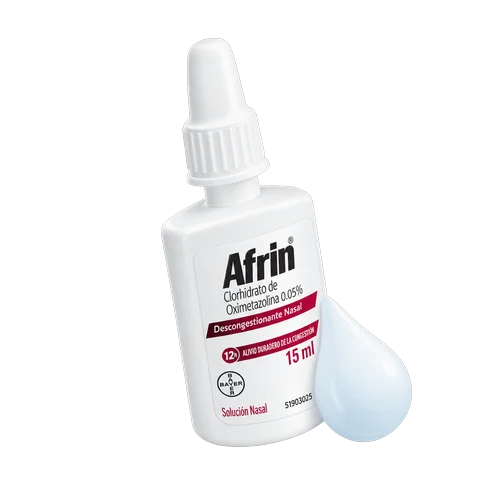
Afrin is a 0.05% oxymetazoline nasal spray for short-term relief of blocked nasal passages.

What it is used for

Afrin is used for short-term relief of blocked nasal passages caused by swelling in the nasal lining. It is applied only inside the nose and narrows swollen blood vessels to reduce congestion within minutes. Use it for the shortest period that provides relief, and do not continue beyond three consecutive days unless a qualified prescriber gives a specific plan.

Formulation

Afrin contains oxymetazoline hydrochloride at a concentration of 0.05% in a nasal spray. Oxymetazoline belongs to the topical alpha-adrenergic decongestant class. It acts locally on blood vessels in the nasal mucosa, where inflammation from a cold, allergic rhinitis, or sinus congestion can produce marked swelling.

The product is intended for nasal use. It does not treat the underlying virus or remove an allergic trigger. Its role is temporary reduction of nasal blockage so that breathing through the nose becomes easier.

The bottle contains 15 ml. Dose selection varies. Age, medicines, and health conditions matter.

Aim the nozzle slightly outward toward the side wall of the nostril rather than toward the nasal septum. This reduces direct impact on the delicate central tissue.

Mechanism of action

Oxymetazoline activates alpha-adrenergic receptors in blood vessels supplying the nasal turbinates. The resulting vasoconstriction reduces blood flow to swollen tissue. As the turbinates become less engorged, the nasal airway opens and airflow improves.

The response can feel rapid because Afrin acts directly on the nasal lining. It does not need to pass through the digestive system, and food does not affect its local action.

Vascular response in the nasal passages

The nasal turbinates are soft structures that warm inhaled air. They also humidify it. During a cold or allergic reaction, their blood vessels widen. The tissue then fills with fluid. That process narrows the airway.

Oxymetazoline produces vasoconstriction, which contracts those enlarged vessels. Nasal resistance falls as the mucosal swelling decreases.

Afrin does not provide the same type of treatment as an intranasal corticosteroid. Oxymetazoline changes vessel tone quickly. Corticosteroid sprays reduce inflammatory signalling over time and are used for conditions such as allergic rhinitis.

Formulation preservatives and nasal irritation

A blocked nose after several days of frequent use may represent rebound congestion rather than a new infection. This cycle is known clinically as rhinitis medicamentosa.

How to use it

Afrin should be used for the shortest period that provides relief. U.S. Food and Drug Administration non-prescription directions for oxymetazoline products commonly limit continuous use to three days, while otolaryngology practice often discusses an upper limit of five days for carefully selected short-term use [1].

For a product containing 0.05% oxymetazoline, the practical rule is:

  • Use only by the nasal route.
  • Do not extend treatment beyond three consecutive days unless a qualified prescriber has given a specific plan.
  • A five-day ceiling is sometimes used in clinical practice, but longer use raises the chance of rebound congestion.
  • Do not increase frequency because the nose feels blocked before the next planned application.
  • Do not share the spray bottle with another person.
  • If congestion continues after the short course, reassess the cause instead of continuing the decongestant.

The Food and Drug Administration and the American Academy of Otolaryngology–Head and Neck Surgery both emphasize brief use of topical nasal decongestants. The exact plan may change with age, cardiovascular disease, other medicines, and the cause of congestion.

Write down the first day of use in your phone. Nasal decongestants are easy to continue because each application feels helpful, while the rebound effect develops gradually.

Comparison

Different nasal treatments address different causes. They should not be treated as interchangeable versions of Afrin.

Treatment category Active ingredients and main role
Intranasal corticosteroid Fluticasone, budesonide, or triamcinolone; reduces allergic and inflammatory swelling over time
Intranasal antihistamine Azelastine or olopatadine; reduces histamine-driven symptoms such as sneezing and itching
Intranasal anticholinergic Ipratropium; reduces excessive watery nasal discharge

Fluticasone, budesonide, and triamcinolone are more suitable for ongoing inflammatory rhinitis than oxymetazoline, though they do not open the nose as quickly. Azelastine and olopatadine can help when sneezing, itching, and clear runny discharge suggest an allergic component. Ipratropium is directed mainly at watery rhinorrhoea and may not relieve marked nasal blockage.

Saline irrigation is a non-vasoconstrictor option for mucus clearance. It can be combined with some longer-term nasal treatments, though the order and timing should follow the prescribed plan. A saline rinse before a medicated spray may clear mucus from the nasal surface and improve contact with the lining.

The limitation is speed. Anti-inflammatory sprays often require regular use before the full benefit becomes clear. Afrin acts faster, but its benefit comes with a strict duration limit.

Common mistakes

The most frequent problems are practical rather than pharmacological:

  • Continuing treatment because the first applications worked so well
  • Increasing the number of sprays when relief becomes shorter
  • Using Afrin alongside another topical decongestant
  • Spraying toward the septum rather than the outer nasal wall
  • Sharing one bottle between family members
  • Assuming persistent blockage always means the infection is worsening
  • Forgetting to mention the spray when discussing blood pressure or heart symptoms
  • Treating a child with an adult-strength product
  • Lying down immediately after forceful spraying, allowing liquid to drain into the throat
  • Continuing despite recurrent bleeding, crusting, or severe burning

The bottle should be handled with clean hands, and the nozzle should not be inserted deeply. Wiping the outside of the nozzle after use is preferable to rinsing the internal mechanism under a tap, which can introduce water and contamination.

Who should not use it

This medication is not for you if you have a known allergy to oxymetazoline or another ingredient in the formulation.

  • Uncontrolled hypertension or significant heart disease
  • Narrow-angle glaucoma
  • Hyperthyroidism
  • Diabetes
  • Enlarged prostate with difficulty passing urine
  • Recent nasal surgery or significant nasal injury
  • A history of frequent nosebleeds
  • Use of monoamine oxidase inhibitors or other medicines that can raise blood pressure

When this is not for you

Afrin is not suitable for everyone. Do not use it if you are allergic to oxymetazoline or any ingredient in the formulation. Ask a clinician before using it if you have uncontrolled high blood pressure, heart disease, glaucoma, thyroid disease, diabetes, prostate-related difficulty urinating, recent nasal surgery, significant nasal injury, or frequent nosebleeds. Also seek advice if you take medicines that can raise blood pressure, including monoamine oxidase inhibitors or other decongestants.

Unwanted effects

The most common complication of extended oxymetazoline use is rebound nasal obstruction. Dryness, burning, crusting, sneezing, and nosebleeds can also occur. Frequent spraying may damage the mucosal barrier, especially when the nozzle repeatedly contacts the septum.

Rarely, prolonged bilateral use of topical vasoconstrictors has been associated with severe mucosal injury and septal perforation. A septal perforation is a hole in the tissue separating the two nasal passages. Warning symptoms include recurrent bleeding from one or both nostrils, persistent crusting, whistling during breathing, pain, or a sore that does not heal.

Oxymetazoline can be absorbed into the circulation in small amounts. Palpitations, a faster heartbeat, raised blood pressure, dizziness, tremor, or unusual nervousness are possible, especially after excessive use or accidental swallowing. Stop using the spray and seek urgent assessment for severe chest pain, fainting, marked shortness of breath, or a very irregular heartbeat.

A nosebleed often comes from irritated tissue or spraying directly at the septum. Repeatedly aiming the nozzle toward the centre of the nose can make the problem worse. Aiming outward and avoiding forceful nose blowing immediately after application may reduce trauma.

Common local effects include:

  • Nasal dryness or burning
  • Sneezing after application
  • Increased mucus
  • Headache
  • Nosebleed
  • Temporary irritation or unpleasant taste
If the inside of the nose feels dry, avoid inserting cotton buds or tissues deeply into the nostril. Mechanical rubbing can prolong irritation and trigger bleeding.

What doctors say

In clinical practice, doctors generally view Afrin as a short-term symptom reliever, not a maintenance treatment for chronic rhinitis. The strongest benefit is rapid reduction of swollen nasal tissue. The main limitation is that repeated use can make the original congestion harder to control.

An ENT clinician will often ask three practical questions: how many days the spray has been used, how frequently it is applied, and whether congestion returns before the next application. Those details help distinguish a continuing cold from rhinitis medicamentosa.

The European Medicines Agency describes nasal decongestants as products requiring attention to local and systemic effects, especially when used repeatedly. A clinician may select a corticosteroid, antihistamine, saline treatment, or another approach when allergies, polyps, chronic sinus disease, or excessive watery discharge are driving symptoms.

Afrin can be useful when the indication is short-lived and the duration is controlled. It becomes a poor choice when each application is being used to overcome congestion caused by the previous one.

What customers often ask

How should the Afrin spray device be cleaned and handled?

The nozzle should remain clean and should not be shared with another person. After use, wipe the outside of the nozzle with a clean tissue and replace the cap. Avoid inserting the nozzle deeply or rinsing the internal pump under tap water, since moisture can affect cleanliness and function. The FDA’s 2023 Drug Facts label for oxymetazoline nasal spray supports careful handling and avoidance of cross-contamination with multi-use nasal products.

Can Afrin cause nosebleeds?

Yes, oxymetazoline can contribute to dryness, irritation, and nosebleeds, especially when used repeatedly or directed at the nasal septum. Persistent bleeding, painful crusting, or a sore that does not heal needs medical assessment. The EMA’s 2022 Summary of Product Characteristics for oxymetazoline nasal spray describes local irritation as a recognised concern. Direct the spray toward the outer wall of the nostril and avoid forceful nose blowing immediately afterwards.

Can Afrin affect driving, concentration, or machinery work?

Afrin is applied locally, but excessive use or individual sensitivity may cause dizziness, nervousness, headache, or palpitations. Do not drive or operate machinery if you feel dizzy, faint, unusually restless, or unable to concentrate. The FDA’s 2023 Drug Facts label for oxymetazoline nasal spray warns about adverse reactions that can impair normal activities in susceptible users. A first application is best used when you can observe how your body responds.

Can Afrin be used during pregnancy or breastfeeding?

Pregnancy and breastfeeding require an individual assessment of the shortest useful treatment period. Oxymetazoline may have systemic effects despite nasal administration, especially when used more often than directed. WHO information on medicines in pregnancy, reviewed in 2024, supports discussing the indication and alternatives before repeated use. Seek clinical advice promptly if congestion is severe, persistent, or associated with high blood pressure.

What happens after stopping Afrin, and does it need tapering?

After brief use, most people can stop without tapering. After prolonged or frequent use, congestion may temporarily worsen because of rhinitis medicamentosa. The EMA’s 2022 Summary of Product Characteristics for oxymetazoline nasal spray describes this rebound pattern and the need to limit duration. A clinician may recommend stopping directly, treating one nostril at a time, or adding an anti-inflammatory nasal treatment when overuse has become established.

Can older adults use Afrin?

Older adults may use oxymetazoline only when the benefit and risks are suitable for their health profile. High blood pressure, heart rhythm problems, glaucoma, thyroid disease, diabetes, and prostate symptoms are more common with age and can affect the choice of decongestant. MOHAP patient-safety guidance published in 2023 emphasises reviewing medicines and chronic conditions in older adults. A shorter course and closer observation are sensible when cardiovascular or urinary symptoms are present.

Do you offer anonymous delivery?

Your order will be securely packed and shipped within 24 hours. This is exactly what your package will look like (images of an actual item sent). It has the size and look of a regular private letter (24x11x0.7 cm) and its contents cannot be seen.

Customer Feedback on Afrin

Based on 4 reviews

Lakshmi, 53 Verified
Rating: 3 out of 5

My nose opened quickly and I slept better. On the fourth night the blockage returned before bedtime, so I stopped rather than increasing it. Saline rinsing helped, although the dryness lasted several days.

Ruwais Three nights 1 Oct 2026
Maria, 34 Verified
Rating: 4.5 out of 5

The first application worked within minutes and made the flight easier. I had a bitter taste afterwards and some sneezing, but no palpitations. I kept the course short because I had previously continued a decongestant for more than a week.

Madinat Zayed Two days 10 Oct 2026
Anjali, 63 Verified
Rating: 3 out of 5

It relieved the pressure at night, but I developed crusting and a small nosebleed after several days. A clinician advised me to stop the decongestant and use a different treatment plan. The congestion felt worse briefly after stopping.

Al Majaz Several days 21 Oct 2026
Meera, 26 Verified
Rating: 3 out of 5

The spray was convenient and the effect was fast. My throat tasted slightly bitter after each use, which I disliked. It helped the cold, but I would not use it continuously because the rebound warning made sense after the blockage returned the next morning.

Liwa Two evenings 30 Oct 2026

Sources

  1. U.S. Food and Drug Administration (2023). Drug Facts label — oxymetazoline hydrochloride nasal spray
Get our free app Shop faster and track your orders 3.4 · 316 reviews Install