Skip to content
Fast & Discrete Delivery Save up to 80%
In stock Ashwagandha
Stress Relief

Ashwagandha

Stress-response balance is the main wellness purpose of Ashwagandha, a botanical adaptogen used by adults seeking support for calm, sleep quality, and mental resilience. The product is a…

Guaranteed quality Original product
Delivery: from 4 days Discreet shipping
24/7 Support Always available
Active ingredient: Ashwagandha
Select pack Package Per unit Price
AED 199.00 AED 398.00
AED 180.43 AED 597.00 AED 541.28 Save 9%
AED 171.14 AED 796.00 AED 684.56 Save 14%
Free Regular Delivery AED 164.77 AED 995.00 AED 823.86 Save 17%
Free Regular Delivery AED 161.19 AED 1,194.00 AED 967.14 Save 19%
Free Regular Delivery AED 158.63 AED 1,393.00 AED 1,110.42 Save 20%
Free Express Delivery AED 156.22 AED 1,592.00 AED 1,249.72 Save 22%
Free Express Delivery AED 154.78 AED 1,791.00 AED 1,393.00 Save 22%
Best value Free Express Delivery AED 152.83 AED 1,990.00 AED 1,528.32 Save 23%

Free delivery on orders from AED 796.00, free express delivery from AED 1,194.00

Secure payment methods:
VISA AMEX JCB DISCOVER

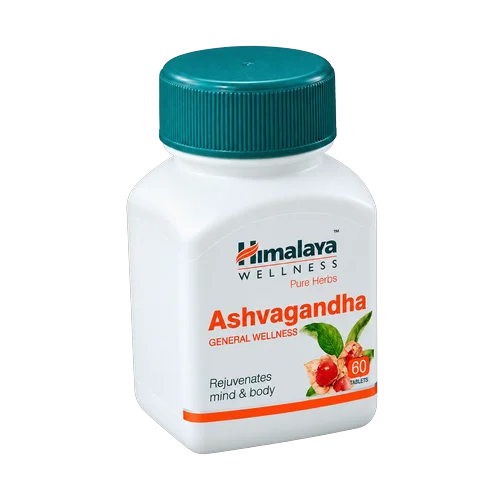
Stress-response balance is the main wellness purpose of Ashwagandha, a botanical adaptogen used by adults seeking support for calm, sleep quality, and mental resilience. The product is a general-wellness supplement in a bottle containing 60 units, with Ashwagandha associated with mind-and-body rejuvenation.

Overview

Ashwagandha is a botanical supplement derived from Withania somnifera, a plant used in Ayurvedic medicine. In modern wellness practice, it is described as an adaptogen: a plant substance studied for its potential to support the body’s response to physical and psychological stress.

What it is used for

Ashwagandha is a general-wellness botanical supplement for adults seeking support for calm, sleep quality, mental resilience, and balance in the body’s response to physical and psychological stress. It is associated with mind-and-body rejuvenation.

Formulation

Ashwagandha is supplied here as a bottle containing 60 units. The product is positioned for general wellness, so its use should remain within the recommended amount agreed with a doctor or pharmacist.

Powdered herb and concentrated extracts are not identical. A powder contains a broader mixture of plant material, while an extract is produced to concentrate selected constituents. A standardized extract may offer more consistent levels of marker compounds between batches, but standardization does not automatically prove that every preparation will produce the same result.

Preparation category Main characteristic Practical point
Ashwagandha powder Less concentrated plant material May be harder to compare between products
Standardized extract Controlled marker-compound content More consistent dosing in clinical research
Ashwagandha bottle preparation Convenient daily supplement format Use the agreed amount for the intended purpose

The 60-unit bottle supports a structured course of use. It does not establish that the same amount is suitable for every adult, because the purpose of use, extract strength, age, medicines, and medical conditions all influence the appropriate plan.

Mechanism of action

Ashwagandha is studied mainly in relation to the hypothalamic-pituitary-adrenal axis, commonly called the HPA axis. This system connects the brain and adrenal glands during the stress response. When the brain perceives prolonged strain, the hypothalamus signals the pituitary gland, which then stimulates the adrenal glands to release cortisol.

Ashwagandha may help moderate this response in some adults. Clinical research has reported improvements in perceived stress and changes in stress-related measures after repeated use of certain root extracts, though the evidence does not establish one universal effect for every product. A randomized controlled trial published in the Indian Journal of Psychological Medicine found reduced stress scores with a concentrated Ashwagandha root extract over the study period [1].

The herb is not a sedative in the same way as a prescription hypnotic. It may support relaxation indirectly by influencing stress-response pathways, sleep quality, and nervous-system balance. Some people feel calmer; others notice little change or experience unwanted drowsiness.

Impact on Cortisol and Nervous-System Regulation

Cortisol is useful in short bursts because it helps maintain blood pressure, blood glucose, alertness, and energy availability. Persistent activation of the HPA axis can be associated with poor sleep, irritability, mental fatigue, and difficulty recovering after stressful days.

Ashwagandha should not be described as a cortisol blocker. Cortisol is essential, and excessively reducing it would also be harmful. The more accurate description is that Ashwagandha may support a more balanced stress response in selected users.

It is not a stimulant. Some users report calmness rather than increased drive.

If Ashwagandha makes you sleepy, the first practical adjustment is to discuss evening use with a doctor or pharmacist rather than adding another calming product.

How to use it

  • Route: take orally as a botanical supplement from the bottle.
  • Dose: the amount in mg or ml is not specified for this product and should be agreed with a doctor or pharmacist.
  • Frequency: the number of times per day is not specified and depends on the purpose of use; follow the agreed schedule.
  • Timing: the time of day and whether to take it before or after meals are not specified; take it with food if stomach discomfort occurs.
  • Duration: the appropriate duration is not specified and should be agreed with a doctor or pharmacist.
  • Do not exceed the agreed amount or frequency.

Comparison

Ashwagandha belongs to the herbal wellness category. It differs from prescription treatments because it is not designed to provide a rapid, predictable correction of a diagnosed anxiety disorder, depression, thyroid disorder, or sleep disorder.

Approach Main mechanism or purpose When it may be considered
Ashwagandha supplement Botanical support for stress-response balance General wellness and gradual stress support
Structured psychological therapy Changes thought, behaviour, and coping patterns Persistent stress, anxiety, or emotional difficulties
Prescription treatment Targeted pharmacological action Diagnosed conditions requiring medical treatment

A supplement may fit someone seeking gradual support for everyday stress, provided there are no relevant contraindications. Therapy offers skills that a supplement cannot provide. Prescription treatment may be more appropriate when symptoms are severe, persistent, or linked to a diagnosed condition.

A limitation is predictability. Evidence for Ashwagandha is preparation-specific, and study results cannot automatically be applied to every bottle or every person.

Common mistakes

Poor results often arise from avoidable use errors:

  • expecting a stimulant-like effect after the first intake;
  • changing the amount repeatedly before allowing enough time to observe tolerance;
  • combining Ashwagandha with several sleep or calming products;
  • taking it despite a thyroid, autoimmune, or liver condition;
  • ignoring ongoing nausea, diarrhoea, or daytime drowsiness;
  • failing to mention it before surgery;
  • doubling a missed dose;
  • continuing it after jaundice, dark urine, or severe abdominal pain;
  • assuming that a traditional herb cannot interact with prescription treatment.

Driving deserves specific attention. If the product causes sleepiness, slowed reactions, dizziness, or poor concentration, do not drive or operate machinery until the effect has fully resolved.

It is sensible to begin on a day without demanding driving or safety-critical work. This allows the individual response to be observed in a controlled setting.

Who should not use it

Avoid use or obtain specific clinical approval in these situations:

  • pregnancy or breastfeeding;
  • autoimmune disease, including rheumatoid arthritis, lupus, multiple sclerosis, or Hashimoto’s disease;
  • thyroid disease or treatment with thyroid hormones;
  • known liver disease or a previous unexplained liver reaction;
  • planned surgery;
  • allergy to Ashwagandha or related plant ingredients;
  • use of sedatives, sleep medicines, anticonvulsants, or other products that cause drowsiness;
  • medicines for diabetes or high blood pressure;
  • immunosuppressive treatment.

Potential interactions are clinically relevant. Ashwagandha may add to the sedative effect of medicines used for sleep, anxiety, seizures, or pain. It may also alter blood-glucose or blood-pressure control and may influence thyroid hormone activity. People taking levothyroxine, antidiabetic treatment, antihypertensives, immunosuppressants, or sedatives need individualized advice before use.

When this is not for you

Ashwagandha is not suitable for everyone. This product is not for you without specific medical approval if you have a condition or medicine that could be affected by immune, thyroid, liver, blood-pressure, or sedative effects.

Unwanted effects

Ashwagandha is often tolerated by adults when used appropriately, but mild adverse effects can occur. Reported problems include stomach upset, loose stools, nausea, and drowsiness. A person with an allergy to the plant or another ingredient may develop itching, rash, swelling, or breathing difficulty.

The National Center for Complementary and Integrative Health describes short-term use as generally tolerated in studied adults but also highlights concerns involving liver injury, thyroid effects, pregnancy, and interactions with medicines [2]. Long-term safety has not been established as clearly as short-term use.

Common practical problems include:

  • nausea when taken on an empty stomach;
  • loose stools after starting;
  • daytime sleepiness;
  • headache or a feeling of excessive sedation;
  • worsening symptoms in people with thyroid or autoimmune conditions;
  • allergic reactions, which require prompt medical attention.

Stop using Ashwagandha and seek urgent medical care for yellowing of the skin or eyes, dark urine, severe abdominal pain, facial swelling, trouble breathing, fainting, chest pain, severe confusion, or rapidly worsening weakness.

One subtle warning concerns the liver. Unusual fatigue alone is nonspecific, but fatigue combined with dark urine, pale stools, itching, or jaundice needs urgent assessment rather than continued self-treatment.

Do not restart Ashwagandha after suspected liver symptoms unless a clinician has assessed the episode and specifically advises resuming it.

What doctors say

In clinical practice, doctors usually set expectations around gradual support rather than an immediate transformation. Ashwagandha may be considered for an adult with everyday stress and adequate sleep habits, but persistent anxiety, low mood, panic attacks, unexplained weight change, or severe insomnia requires assessment of the underlying cause.

A physician will also ask about thyroid disease, autoimmune illness, liver history, pregnancy plans, alcohol intake, and current medicines. Those questions are not routine paperwork; they identify the main situations in which a botanical supplement can become unsuitable.

The best response is judged by function. Better sleep continuity, fewer stress-related physical symptoms, or improved ability to recover after demanding days are more useful measures than expecting a dramatic feeling after one dose.

One practical clinical point is that a supplement should not mask symptoms that need investigation. Palpitations, marked tremor, persistent diarrhoea, or pronounced weight loss may indicate a thyroid or other medical problem rather than ordinary stress.

What customers often ask

Does autoimmune disease rule out Ashwagandha?

Autoimmune disease is a reason to avoid self-directed use unless a clinician specifically approves it. Ashwagandha may influence immune activity, which could interfere with disease control or immunosuppressive treatment. The NCCIH safety summary available in 2024 identifies autoimmune conditions as an important precaution. A doctor should review the diagnosis and medicines before use. The review should also consider symptom control.

Can Ashwagandha affect driving, concentration, or machinery work?

Yes, drowsiness or slowed concentration can occur in some users, especially when Ashwagandha is combined with alcohol, sleep medicines, sedatives, or other calming products. The NHS guidance on medicines and driving, updated in 2025, supports avoiding driving whenever a substance impairs alertness or reaction time. Test individual tolerance before safety-critical work. Do not operate machinery if you feel sleepy, dizzy, or mentally slowed.

What should I do after a missed dose?

Take the missed amount only when the next planned intake is not close, and never double the next amount. If the product is being used under an agreed schedule, resume the usual timing rather than trying to compensate. General supplement guidance from the WHO in its 2009 herbal-medicine monograph supports avoiding unsupervised escalation after a missed intake. A single missed dose usually does not justify taking extra.

What happens when Ashwagandha is stopped, and does it need tapering?

Ashwagandha is not generally managed like a prescription medicine that requires a formal tapering schedule. Some people notice no change after stopping, while others may feel that stress or sleep symptoms return because the underlying problem remains. The NCCIH information reviewed in 2024 does not establish a universal withdrawal syndrome. If stopping follows drowsiness, digestive symptoms, jaundice, or another adverse effect, do not restart it without medical advice.

How soon might the effect become noticeable?

Some people notice changes in relaxation or sleep within the first few weeks, while others notice no clear benefit. Trials of Ashwagandha have commonly evaluated outcomes after repeated use over several weeks rather than after one intake. A 2012 randomized trial in the Indian Journal of Psychological Medicine assessed stress outcomes over a sustained course . Keep expectations gradual and track specific changes instead of relying on one day’s mood.

Which symptoms require stopping Ashwagandha and urgent medical assessment?

Stop the product and seek urgent care for facial or throat swelling, breathing difficulty, fainting, chest pain, severe confusion, or rapidly worsening weakness. Yellow skin or eyes, dark urine, pale stools, severe itching, or intense abdominal pain may indicate liver injury and also require prompt assessment. The U.S. National Library of Medicine’s LiverTox resource, reviewed in 2024, identifies liver injury as a rare but important concern with Ashwagandha-containing products [3]. Severe allergic or liver-related symptoms should not be managed by reducing the amount.

Do you offer anonymous delivery?

Your order will be securely packed and shipped within 24 hours. This is exactly what your package will look like (images of an actual item sent). It has the size and look of a regular private letter (24x11x0.7 cm) and its contents cannot be seen.

Customer Feedback on Ashwagandha

Based on 4 reviews

Rania, 61 Verified
Rating: 3.5 out of 5

I chose it because stress had affected my sleep. The first few evenings made me slightly sleepy, so I changed the timing after discussing it with a pharmacist. By the fourth week I felt less tense, although it was not a dramatic change.

Deira Six weeks 30 Sep 2026
Salma, 68 Verified
Rating: 3 out of 5

My sleep felt a little steadier and I woke less often. I also had mild stomach discomfort during the first few days, which improved when I took it with food. I stopped when I developed a rash and arranged medical advice.

Dubai Marina About one month 10 Oct 2026
Hessa G., 66 Verified
Rating: 5 out of 5

I noticed better tolerance of busy days rather than extra energy. The effect was gradual. I kept a short note of sleep and stress because my memory of the first week was not reliable.

Bur Dubai Two months 17 Oct 2026
Noura P., 62 Verified
Rating: 1.5 out of 5

It did not suit me. I felt drowsy in the afternoon and had loose stools, so I stopped. The symptoms settled, and I would not combine it with other calming products again.

Ruwais Three weeks 28 Oct 2026

Sources

  1. Indian Journal of Psychological Medicine (2012). A Prospective, Randomized Double-Blind, Placebo-Controlled Study of Safety and Efficacy of a High-Concentration Full-Spectrum Extract of Ashwagandha Root in Reducing Stress and Anxiety in Adults.
  2. National Center for Complementary and Integrative Health (2024). Ashwagandha: Usefulness and Safety.
  3. U.S. National Library of Medicine (2024). LiverTox: Clinical and Research Information on Drug-Induced Liver Injury — Ashwagandha.
Get our free app Shop faster and track your orders 3.4 · 316 reviews Install