Skip to content
Fast & Discrete Delivery Save up to 80%
In stock Humira
Autoimmune Diseases

Humira

Humira contains adalimumab, a TNF inhibitor used for autoimmune and inflammatory diseases in adults and children. It helps treat chronic inflammatory conditions such as rheumatoid arthritis…

Guaranteed quality Original product
Delivery: from 4 days Discreet shipping
24/7 Support Always available
Active ingredient: Adalimumab
Select dosage:
Select pack Package Per unit Price
Free Express Delivery AED 1,502.45 AED 3,004.90
Free Express Delivery AED 1,453.70 AED 6,009.80 AED 5,814.78 Save 3%
Best value Free Express Delivery AED 1,419.87 AED 12,019.60 AED 11,358.92 Save 5%
Free Express Delivery AED 1,966.12 AED 3,932.24
Free Express Delivery AED 1,902.44 AED 7,864.48 AED 7,609.76 Save 3%
Best value Free Express Delivery AED 1,859.16 AED 15,728.96 AED 14,873.26 Save 5%

Free delivery on orders from AED 796.00, free express delivery from AED 1,194.00

Secure payment methods:
VISA AMEX JCB DISCOVER

Humira contains adalimumab, a TNF inhibitor used for autoimmune and inflammatory diseases in adults and children. It helps treat chronic inflammatory conditions such as rheumatoid arthritis, psoriatic arthritis, and plaque psoriasis.

Overview

Adalimumab, the active ingredient of Humira, is a TNF inhibitor used for autoimmune and inflammatory diseases in adults and children.

What it is used for

Adalimumab is used for several chronic inflammatory conditions. The exact indication, treatment schedule, and duration depend on the patient’s age, diagnosis, disease severity, previous treatment, and response.

Common therapeutic uses include:

  • Rheumatoid arthritis in adults, often with methotrexate or another disease-modifying antirheumatic drug.
  • Psoriatic arthritis, where treatment aims to reduce joint inflammation and improve movement.
  • Plaque psoriasis in adults and selected paediatric patients with significant disease.
  • Ankylosing spondylitis and non-radiographic axial spondyloarthritis.
  • Crohn’s disease and ulcerative colitis in eligible adults and children.
  • Polyarticular juvenile idiopathic arthritis.
  • Hidradenitis suppurativa.
  • Non-infectious uveitis in suitable patients.

In rheumatoid arthritis, the clinical goal is more than temporary pain relief. Controlling inflammation may help preserve joint function and reduce structural damage over time. In plaque psoriasis, adalimumab can reduce raised, scaly plaques and the inflammatory activity beneath them. In inflammatory bowel disease, treatment aims to reduce intestinal inflammation and support sustained remission.

The European Medicines Agency recognises adalimumab as a treatment option across several immune-mediated diseases, with separate dosing schedules for each condition and age group [2]. A diagnosis alone does not determine the regimen; Crohn’s disease, psoriasis, arthritis, and paediatric indications use different treatment plans.

Clinical objectives by condition

Condition Main treatment objective Typical specialist
Rheumatoid or psoriatic arthritis Reduce synovitis, pain, stiffness, and joint damage Rheumatologist
Plaque psoriasis Reduce plaques, scaling, and skin inflammation Dermatologist
Crohn’s disease or ulcerative colitis Control intestinal inflammation and maintain remission Gastroenterologist

Patients may begin to notice less stiffness or fewer skin symptoms before laboratory markers fully improve. Some people respond well, while others need a different biologic class if disease activity remains high.

Formulation

Humira contains adalimumab, a recombinant human IgG1 monoclonal antibody. It belongs to the tumour necrosis factor inhibitor class, also called anti-TNF therapy.

Mechanism of action

Adalimumab binds to tumour necrosis factor-alpha, or TNF-alpha, a signalling protein that drives inflammation in several autoimmune diseases.

TNF-alpha normally attaches to cell-surface receptors known as p55 and p75. This interaction activates inflammatory pathways. Adalimumab binds TNF-alpha and prevents it from activating these receptors, reducing the release of inflammatory signals in affected tissues. The result is lower inflammatory activity in joints, skin, the gastrointestinal tract, and other involved organs [1].

Humira works on a specific immune pathway rather than suppressing every immune function equally. This targeted action explains why it can help with chronic inflammatory disease while still requiring careful screening for infections and other immune-related risks.

How to use it

The medicine is given by injection under the skin. It is not designed for intravenous administration.

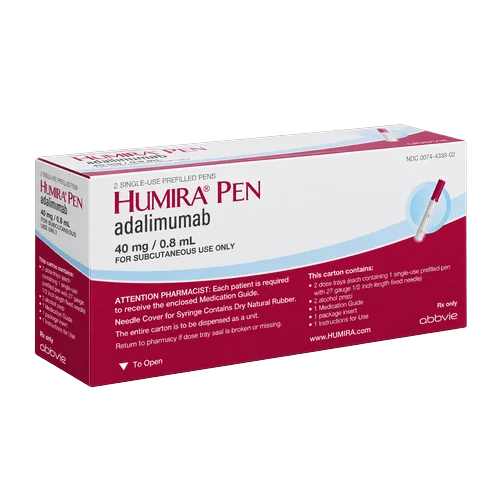
Humira is supplied here as a prefilled injector containing adalimumab for subcutaneous use. The injector is intended for a single administration and should be handled according to the approved instructions provided with the product.

The regimen for the chosen strength must be confirmed with a healthcare professional before treatment begins. Adalimumab schedules differ substantially between rheumatoid arthritis, psoriasis, inflammatory bowel disease, hidradenitis suppurativa, and juvenile idiopathic arthritis.

A practical administration routine includes:

  1. Allow the injector to reach a suitable temperature according to the approved product instructions before use.
  2. Wash and dry the hands.
  3. Choose an appropriate injection site and clean it with an alcohol swab if required by the clinical procedure.
  4. Allow the skin to dry before injecting.
  5. Use the injector exactly as trained by the prescribing team.
  6. Avoid rubbing the site after the injection.
  7. Place the used injector directly into an approved sharps container.

Never share an injector, even if the needle has not visibly contacted another person. A used device may carry blood or tissue contamination. Household rubbish is unsuitable for loose sharps because it can injure other people.

Storage matters because adalimumab is a biologic protein. It is generally kept refrigerated and protected from light, with specific temperature limits defined by the product instructions. Freezing can damage the medicine. A temperature excursion should be discussed with the dispensing service or prescriber before administration rather than judged by appearance alone.

Many patients find injections easier when they schedule them at a predictable time and keep a written record of the date and site used. This helps prevent accidental early repeat dosing and makes site rotation easier.

If an injection is missed, do not compensate with an extra dose. The correct timing depends on the prescribed regimen and the interval to the next scheduled administration.

Comparison

Humira targets TNF-alpha directly. Other anti-TNF medicines may use different antibody structures or administration schedules, while non-TNF biologics act on separate immune pathways.

Treatment approach Immune target Clinical distinction
Adalimumab TNF-alpha Fully human monoclonal antibody given subcutaneously
TNF inhibitor with a different antibody structure TNF-alpha Same broad target, with different molecular design and regimen
Non-TNF biologic Another immune pathway May be selected after inadequate response or intolerance to TNF inhibition

The choice depends on the disease, previous biologic exposure, coexisting conditions, infection history, pregnancy plans, and the clinician’s treatment strategy. A patient with inflammatory bowel disease may need a therapy with established intestinal activity, while a patient with demyelinating disease may require a non-TNF approach.

Biosimilar adalimumab products are also used in clinical practice. A biosimilar is designed to match the reference medicine in quality, biological activity, and clinical performance within regulatory comparability standards. Switching decisions should follow the prescribing team’s plan.

Common mistakes

Several preventable errors can reduce treatment benefit or increase risk:

  • Injecting into irritated, scarred, or actively inflamed skin.
  • Repeating an injection because the device window or indicator was misunderstood.
  • Storing the injector in a freezer or leaving it in direct sunlight.
  • Sharing a device with another person.
  • Taking a missed dose too close to the next scheduled dose without clinical guidance.
  • Continuing treatment through a significant infection without contacting the prescriber.
  • Starting anakinra, abatacept, another biologic, or a new immune-suppressing medicine without review.
  • Forgetting to mention tuberculosis exposure or hepatitis history.
  • Disposing of the used injector in an ordinary rubbish bin.
  • Stopping treatment as soon as symptoms improve, even though inflammation may still be active.

Another common mistake is judging treatment only by day-to-day pain. Autoimmune disease can remain active while symptoms fluctuate, so scheduled laboratory monitoring and specialist assessment still matter.

Who should not use it

Humira should not be started without specialist assessment when any of the following applies:

  • Active tuberculosis or another serious active infection.
  • A severe uncontrolled infection, including serious bacterial, fungal, or opportunistic infection.
  • A previous severe hypersensitivity reaction to adalimumab or an excipient.
  • Moderate or severe heart failure, where TNF inhibition may worsen the condition.
  • A current infection that has not been assessed, especially with fever, persistent cough, painful urination, or unexplained weakness.
  • A history of recurrent serious infections requiring hospital treatment.
  • Untreated hepatitis B infection or a significant risk of reactivation without an appropriate monitoring plan.
  • A demyelinating disorder, such as multiple sclerosis, unless the specialist considers treatment appropriate.
  • A suspected malignancy or unexplained blood-count abnormality requiring investigation.

Adalimumab should not be combined with anakinra or abatacept. Both combinations can increase immune suppression and the risk of serious infection without providing a routine therapeutic advantage. Other biologic disease-modifying antirheumatic drugs also require specialist review before switching or combining treatment [3].

Live vaccines require planning. A clinician should review vaccination status before immunosuppressive treatment begins. Non-live vaccines may still be recommended, although the immune response can differ between patients.

When this is not for you

Humira is not suitable for every patient. The key concerns relate to serious infection, tuberculosis, hepatitis B reactivation, allergic reactions, and combined immune suppression.

Before treatment, clinicians commonly assess tuberculosis risk and hepatitis B status. Blood tests may include a full blood count, liver tests, and screening for viral hepatitis. The assessment is repeated when symptoms or treatment history create additional concern.

Tell the prescribing team about fever, a persistent cough, night sweats, recent tuberculosis exposure, hepatitis, recurrent infections, or planned surgery before the first injection. These details can change the timing of treatment.

Unwanted effects

Injection-site reactions are among the more frequent problems. They may include redness, itching, swelling, bruising, or discomfort around the injection area. These effects are often mild and temporary, though persistent or worsening reactions deserve clinical review.

Other reported effects include:

  • Upper respiratory infections.
  • Headache.
  • Nausea or abdominal discomfort.
  • Rash or itching.
  • Sinus symptoms.
  • Fatigue.
  • Changes in blood-cell counts.
  • Increased liver enzymes.

TNF inhibition can increase susceptibility to serious infections. Urgent medical assessment is needed for breathing difficulty, facial swelling, severe rash, persistent high fever, confusion, coughing blood, or rapidly worsening weakness. A new infection may require temporary interruption of treatment.

Rare but serious complications include invasive fungal infection, tuberculosis, hepatitis B reactivation, severe allergic reaction, demyelinating disease, lupus-like syndrome, and certain blood or lymphatic malignancies. The absolute risk varies with age, other immune-suppressing medicines, underlying disease, and prior infection history.

One practical point is easy to miss: a mild injection-site reaction does not automatically mean an allergy, while throat swelling or breathing difficulty may indicate a medical emergency. The pattern and speed of symptoms matter.

Patients taking methotrexate, corticosteroids, or other immunosuppressants may have a higher infection risk. Alcohol does not have a direct pharmacological interaction with adalimumab, but heavy alcohol use can worsen liver health and complicate infection management, especially when other medicines are involved.

What doctors say

In clinical practice, rheumatologists often assess response through several measures rather than pain alone. They may review morning stiffness, swollen joints, mobility, skin lesions, bowel symptoms, inflammatory markers, imaging, and daily function.

A useful response is not always immediate. Some symptoms improve before others, and a partial early response may lead to continued monitoring rather than an immediate conclusion that treatment has failed. Disease activity, adherence, injection technique, and concurrent medicines all influence the result. Follow-up visits help clinicians distinguish a delayed response from inadequate treatment. The treatment plan can then be adjusted using symptoms, examination findings, and relevant test results.

Doctors also look for loss of response. Symptoms returning after an initial improvement may reflect antibody formation, missed doses, a new trigger, or progression that requires a different treatment strategy. Stopping and restarting biologic therapy without a planned medical review can complicate future treatment.

For children and adolescents, growth, vaccination status, infection exposure, and school attendance may be part of the treatment discussion. Pregnancy and breastfeeding also require an individual risk assessment, because disease control and medicine exposure must be considered together.

What customers often ask

How long does a Humira treatment course last, and is long-term use acceptable?

Humira is often used as a long-term treatment for chronic inflammatory disease, provided it continues to control disease activity and remains suitable for the patient. The American College of Rheumatology guidance available through 2021 supports ongoing disease-modifying treatment when benefits outweigh risks and monitoring remains appropriate. There is no universal stopping date; the prescriber reviews response, infections, laboratory findings, and disease remission before changing therapy.

Can people under 18 use Humira?

Adalimumab is used in selected children and adolescents for conditions such as polyarticular juvenile idiopathic arthritis, paediatric plaque psoriasis, Crohn’s disease, and uveitis. The EMA product information from 2023 describes age-specific indications and dosing schedules, which differ from adult regimens. A paediatric specialist must confirm the diagnosis, injection schedule, vaccination plan, and infection screening before treatment begins.

How does Humira differ from the closest alternative?

Humira contains adalimumab, a fully human monoclonal antibody that neutralises TNF-alpha. A closely related anti-TNF option may target the same cytokine but use a different antibody structure, while non-TNF biologics act on other inflammatory pathways. NICE guidance for rheumatoid arthritis, updated in 2020, places treatment selection within a broader plan involving disease severity, previous response, comorbidities, and patient preference.

What should be discussed with a doctor before starting Humira?

The pre-treatment discussion should cover current infections, tuberculosis exposure, hepatitis B, vaccination history, recurrent infections, cancer history, heart failure, neurological disease, pregnancy plans, and all immune-modifying medicines. The prescriber may arrange blood tests and infection screening before the first injection. WHO guidance published in 2020 on immunisation and immunosuppression supports reviewing vaccination needs before immune-modifying treatment begins.

Which diet, exercise, or habits can help or hinder the result?

There is no special diet that makes adalimumab work by itself. Maintaining a balanced diet, appropriate physical activity, smoking cessation, adequate sleep, and weight management can support general health and may make inflammatory disease easier to manage. The Arthritis Foundation’s 2022 patient guidance also emphasises joint-appropriate exercise, while smoking and heavy alcohol use can worsen health factors relevant to inflammatory disease and treatment monitoring.

Do you offer anonymous delivery?

Your order will be securely packed and shipped within 24 hours. This is exactly what your package will look like (images of an actual item sent). It has the size and look of a regular private letter (24x11x0.7 cm) and its contents cannot be seen.

Customer Feedback on Humira

Based on 3 reviews

Imran, 59 Verified
Rating: 4 out of 5

The morning stiffness became easier to manage after the first part of treatment. I had mild soreness at the injection site twice, so I started rotating between my abdomen and thighs. The injections were simpler than I expected, but I still needed reminders for the schedule.

Dubai Marina Several months 29 Oct 2026
Nadeem, 66 Verified
Rating: 3.5 out of 5

My joint swelling improved, and walking became less tiring. I developed a persistent cough during treatment and paused the next injection after contacting my clinic. The cough needed assessment, so the treatment was not as straightforward as I had first assumed.

Jumeirah Several months 30 Sep 2026
James, 58 Verified
Rating: 3 out of 5

The injector was convenient, and my hands felt less stiff after several weeks. I did not notice a complete change in every symptom. Keeping the device refrigerated and remembering the injection date were the parts that required the most attention.

Al Reem Island Several weeks 9 Oct 2026

Sources

  1. U.S. Food and Drug Administration (2024). HUMIRA (adalimumab) Prescribing Information
  2. European Medicines Agency (2023). Humira: EPAR — Product Information
  3. U.S. Food and Drug Administration (2021). HUMIRA Medication Guide
Get our free app Shop faster and track your orders 3.4 · 316 reviews Install