Skip to content
Fast & Discrete Delivery Save up to 80%
In stock Spiriva
Chronic Obstructive Pulmonary Disease

Spiriva

Tiotropium in Spiriva blocks airway signals that trigger muscle tightening. Spiriva Respimat is prescribed for adults with COPD or maintenance treatment of asthma. Its once-daily inhalation helps…

Guaranteed quality Original product
Delivery: from 4 days Discreet shipping
24/7 Support Always available
Active ingredient: Tiotropium
Select pack Package Per unit Price
AED 11.94 AED 358.20
AED 9.55 AED 716.40 AED 573.12 Save 20%
Free Regular Delivery AED 8.66 AED 1,432.80 AED 1,038.78 Save 28%
Free Express Delivery AED 8.42 AED 2,149.20 AED 1,516.38 Save 29%
Best value Free Express Delivery AED 6.93 AED 3,223.80 AED 1,870.60 Save 42%

Free delivery on orders from AED 796.00, free express delivery from AED 1,194.00

Secure payment methods:
VISA AMEX JCB DISCOVER

Tiotropium in Spiriva blocks airway signals that trigger muscle tightening. Spiriva Respimat is prescribed for adults with COPD or maintenance treatment of asthma. Its once-daily inhalation helps keep the airways open rather than treating a sudden attack.

Overview

Spiriva contains tiotropium, supplied as tiotropium bromide, a long-acting antimuscarinic bronchodilator. It belongs to the anticholinergic agent class and is inhaled through the Respimat soft-mist system.

What it is used for

Spiriva Respimat is used as maintenance bronchodilator treatment in chronic obstructive pulmonary disease, including chronic bronchitis and emphysema. It is also used as add-on maintenance treatment for asthma when prescribed for that purpose. It does not replace a rapid-relief inhaler during a sudden episode of wheezing or breathlessness [2].

Formulation

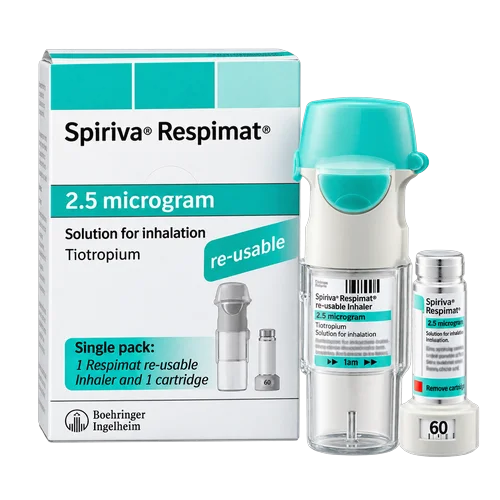
The presentation described here provides 2.5 micrograms per actuation and uses a reusable inhaler with a cartridge containing 60 actuations.

Tiotropium is intended for regular maintenance treatment. It reduces airway narrowing over the day, which can make breathing, walking, and routine activity easier for people with chronic respiratory disease.

Active ingredient and pharmacological class

Tiotropium bromide is a long-acting muscarinic antagonist, also called a LAMA. It prevents acetylcholine from activating muscarinic receptors in the bronchial tree. This reduces contraction of airway smooth muscle and limits some cholinergic signals that promote mucus secretion [1].

Spiriva is inhaled into the lungs, where the active substance acts locally. Only a small proportion reaches the systemic circulation, although anticholinergic effects outside the lungs can still occur.

Approved clinical indications

Spiriva Respimat is used as maintenance bronchodilator treatment in chronic obstructive pulmonary disease, including chronic bronchitis and emphysema. It is also used as add-on maintenance treatment for asthma when prescribed for that purpose. It does not replace a rapid-relief inhaler during a sudden episode of wheezing or breathlessness [2].

The medicine supports control between attacks. It does not provide an immediate rescue effect.

Spiriva belongs in a regular daily routine, not in the role of an emergency inhaler. Keep the prescribed reliever strategy separate from maintenance treatment.

Mechanism of action

Airway narrowing in COPD and asthma involves several processes. Bronchial smooth muscle can contract, airway resistance can rise, and mucus can make airflow more difficult. Tiotropium addresses one of these pathways by blocking muscarinic signalling.

M3 receptor blockade

Acetylcholine normally attaches to M3 muscarinic receptors on airway smooth muscle. This stimulates contraction and can increase airway resistance. Tiotropium competitively blocks these M3 receptors, so acetylcholine has less opportunity to trigger bronchoconstriction.

The result is sustained bronchodilation. The airways remain more open, allowing air to move in and out with less resistance. M3 receptor blockade also reduces cholinergic stimulation of mucus-producing structures.

Tiotropium has prolonged receptor binding, which supports once-daily administration. The medicine does not stimulate the beta receptors targeted by short-acting beta-agonists, and it does not work by reducing airway inflammation in the same way as an inhaled corticosteroid.

How to use it

  • Dose: 2.5 micrograms per inhalation; inhale 2 inhalations per dose. The dose in mg/ml is not established in the available product information.
  • Frequency: Use once daily.
  • Timing: Inhale at the prescribed time of day. No before- or after-meal instruction is established.
  • Duration: Use for maintenance treatment for the duration prescribed for COPD or asthma.
  • Route: Inhale through the Spiriva Respimat soft-mist inhaler. Do not swallow the contents.
  • Spiriva is not intended to replace a rapid-relief inhaler during a sudden episode of wheezing or breathlessness.

Comparison

Tiotropium, ipratropium, and aclidinium all reduce muscarinic airway signalling, but they differ in duration and delivery. The comparison should focus on treatment role rather than brand identity.

Active substance Pharmacological role Typical treatment pattern
Tiotropium Long-acting muscarinic antagonist Maintenance bronchodilation, commonly once daily
Ipratropium Short-acting muscarinic antagonist Shorter-duration bronchodilation, often used several times daily
Aclidinium bromide Long-acting muscarinic antagonist Regular maintenance treatment through a dry-powder device

The medicines are not automatically interchangeable. Different inhalers have different loading, breathing, and dose-release steps. Aclidinium and tiotropium also have different dosing schedules and receptor kinetics, so a prescriber must select the replacement and instructions.

Long-acting antimuscarinic bronchodilators can improve airflow and reduce symptoms in COPD. They do not remove the need for an anti-inflammatory asthma treatment when that treatment is indicated. The choice depends on diagnosis, lung function, symptom pattern, exacerbation history, and inhaler ability [4].

Common mistakes

Several everyday errors reduce the amount of tiotropium reaching the lungs.

  1. Using Spiriva only when breathless. Tiotropium is a maintenance bronchodilator. Irregular use can reduce day-to-day control.
  2. Taking extra doses for sudden symptoms. This can increase dry mouth, blurred vision, constipation, or urinary problems without acting as a rapid reliever.
  3. Breathing too quickly with Respimat. A slow, deep inhalation helps the soft mist travel into the lower airways.
  4. Exhaling into the mouthpiece. Moisture can affect the device and the next inhalation.
  5. Spraying toward the eyes. This may worsen eye pressure in susceptible people.
  6. Swallowing a HandiHaler capsule. Capsules made for HandiHaler are inhaled through the device and are not oral medicine.
  7. Changing from HandiHaler to Respimat without retraining. The loading and inhalation steps are different.
  8. Stopping after one uncomfortable day. Dry mouth or throat irritation may settle, but severe wheezing, facial swelling, or eye pain requires urgent action.
  9. Ignoring a blocked or poorly functioning device. A device problem should be resolved before assuming the medicine has stopped working.

A useful habit is to demonstrate the inhaler technique during a clinical review. Many people know the sequence verbally but still press too early, inhale too fast, or fail to hold the breath briefly after inhalation.

Who should not use it

The clearest contraindication is a previous serious hypersensitivity reaction to tiotropium, atropine, or related substances.

Ipratropium, atropine, oxytropine, some bladder medicines, certain motion-sickness medicines, and some older antidepressants can add anticholinergic effects. Combining tiotropium with another inhaled anticholinergic such as ipratropium may increase dry mouth, constipation, blurred vision, fast heartbeat, and urinary retention. The FDA prescribing information advises caution with medicines that share this pharmacological activity [3].

Pregnancy and breastfeeding require an individual benefit-risk assessment.

When this is not for you

This medication is not for you if

  • You previously had a serious allergic reaction to tiotropium, atropine, or a related antimuscarinic substance.
  • You are experiencing a sudden asthma or COPD attack and need immediate rescue treatment.
  • You have untreated narrow-angle glaucoma and cannot prevent inhaler mist from reaching the eyes.
  • You have urinary retention or severe difficulty passing urine without clinical assessment.
  • You have severe kidney impairment and the prescriber has not reviewed the treatment.
  • You cannot use the inhaler correctly and have no practical support for learning the technique.
Tell the prescriber about prostate symptoms, glaucoma, kidney disease, constipation, and every medicine used for bladder control, allergy, sleep, or travel sickness. These details can change the anticholinergic risk.

Unwanted effects

The most frequent unwanted effect associated with tiotropium is dry mouth. Throat irritation, cough, constipation, headache, and a feeling of a dry throat can also occur. Some effects improve after the first days or weeks, while persistent symptoms may require a treatment review.

Common tolerability concerns

Possible effects include:

  • Dry mouth or increased thirst
  • Throat pain or irritation
  • Cough after inhalation
  • Constipation
  • Headache
  • Blurred vision if the mist reaches the eyes
  • Difficulty passing urine in susceptible people

Dry mouth can make dental care more important. Regular water intake may help, though excessive drinking does not correct the cause. Sugar-free gum can stimulate saliva for some people.

Constipation deserves attention in anyone with a history of bowel obstruction or severe intestinal slowing. Tiotropium can add to the anticholinergic burden of other medicines.

Urgent reactions

Paradoxical bronchospasm is a sudden worsening of wheezing or breathing immediately after inhalation. Stop further doses and seek urgent medical help if breathing becomes rapidly worse after use.

Eye pain, red eyes, blurred vision, halos around lights, or severe headache can indicate acute angle-closure glaucoma. The aerosol should not enter the eyes. Facial swelling, tongue swelling, widespread rash, or difficulty breathing may indicate a serious allergic reaction.

Urinary retention can present as painful inability to pass urine or marked lower abdominal pressure. This needs urgent assessment, especially in men with prostate enlargement.

A dry mouth is common, but sudden wheezing after an inhalation is different. Treat new or rapidly worsening breathlessness as an urgent symptom rather than taking extra Spiriva.

One practical detail is easy to miss: a Respimat mist can leave a small amount of liquid around the mouthpiece. Wipe the mouthpiece after use, and avoid directing the spray toward the eyes. Another is that repeated extra inhalations can increase anticholinergic effects without providing a reliable rescue benefit.

What doctors say

In clinical practice, doctors usually judge Spiriva by daily symptom control, rescue-inhaler use, activity tolerance, exacerbations, and spirometry rather than by one dramatic sensation after the first inhalation.

A respiratory clinician will often check three points:

  • Whether the diagnosis is COPD, asthma, or both
  • Whether the inhaler technique delivers the intended dose
  • Whether another medicine is needed for inflammation or acute symptom relief

Tiotropium can be a useful long-term bronchodilator for COPD. For asthma, it is generally an add-on option when standard controller therapy does not provide enough control. It should not be viewed as a replacement for an inhaled corticosteroid when an inhaled corticosteroid is clinically indicated.

Doctors also look for treatment mismatch. Persistent wheezing may reflect poor technique, active inflammation, infection, smoking exposure, or a need to adjust the wider treatment plan. Increasing Spiriva beyond the prescribed daily amount is not a reliable solution.

The World Health Organization promotes structured assessment of chronic respiratory disease, including symptom control, lung function, and exacerbation risk. A clinician’s review is most useful when the patient can describe the exact inhaler steps, how often rescue treatment is needed, and whether symptoms occur at rest or during exertion.

What customers often ask

How does Spiriva differ from ipratropium?

Spiriva contains tiotropium, a long-acting muscarinic antagonist, while ipratropium is a shorter-acting antimuscarinic. Tiotropium is intended for regular maintenance bronchodilation, whereas ipratropium may be used for shorter-duration symptom relief. The FDA described these differences in its tiotropium and ipratropium prescribing information available in 2023. Neither product should be substituted for the other without a revised treatment plan. A pharmacist or prescriber can confirm the correct device and schedule.

Can alcohol be used while taking Spiriva?

There is no direct alcohol interaction listed as the defining pharmacological issue for tiotropium in the EMA product information reviewed in 2024. Alcohol can still worsen dizziness, dehydration, reflux, or poor judgement around inhaler technique in some people. Heavy alcohol use may also worsen respiratory symptoms and sleep-related breathing problems. Avoid alcohol if it makes your breathing, alertness, or ability to use the inhaler correctly worse.

Can Spiriva be taken with food or on an empty stomach?

Food does not determine the lung delivery of inhaled tiotropium, so Spiriva Respimat can generally be used with meals or between meals. The EMA respiratory-medicine information available in 2024 describes inhaled administration rather than a food-dependent dosing schedule. The inhaler should be used through the mouth and not swallowed. This differs from tablets whose absorption can depend on food.

Which symptoms require stopping Spiriva and seeking urgent medical help?

Sudden worsening wheezing immediately after inhalation may indicate paradoxical bronchospasm and requires urgent assessment. The FDA safety information current in 2023 also identifies eye pain, halos, blurred vision, severe allergic swelling, and inability to pass urine as symptoms needing prompt medical attention. Do not take extra inhalations while waiting for help. A rapid-relief inhaler should be used only according to the person’s established emergency plan.

How soon can the effect of Spiriva become noticeable?

Some people notice easier breathing or less chest tightness during the first day, while others need several days or weeks to recognise a meaningful change. The National Institute for Health and Care Excellence COPD guidance updated in 2023 assesses response through symptoms, activity, exacerbations, and inhaler use rather than one fixed onset time. The full value of maintenance bronchodilation is judged over regular daily treatment. Persistent breathlessness needs clinical review rather than unscheduled extra doses.

Do you offer anonymous delivery?

Your order will be securely packed and shipped within 24 hours. This is exactly what your package will look like (images of an actual item sent). It has the size and look of a regular private letter (24x11x0.7 cm) and its contents cannot be seen.

Customer Feedback on Spiriva

Based on 5 reviews

Bilal, 33 Verified
Rating: 3 out of 5

I used the Respimat every morning for COPD. After about two weeks, climbing the stairs felt less demanding, although my mouth was dry during the first few days.

Ajman About two weeks 30 Sep 2026
Usman, 33 Verified
Rating: 3 out of 5

The breathing improvement was gradual rather than immediate. I initially pressed the inhaler before breathing in, so part of the mist went into the air; a technique review helped.

Al Dhaid 9 Oct 2026
Majid, 57 Verified
Rating: 3.5 out of 5

Spiriva reduced my daily chest tightness, and I needed my reliever less often after several weeks. Constipation became annoying, so my doctor reviewed my other anticholinergic tablets.

Dubai Several weeks 13 Oct 2026
Khalid, 29 Verified
Rating: 2 out of 5

I expected it to stop an asthma flare quickly, which it did not. Once I understood it was maintenance treatment, the routine made more sense.

Jebel Ali 22 Oct 2026
Daniel, 54 Verified
Rating: 3.5 out of 5

The inhaler was easier for me than a dry-powder device because I could inhale the mist slowly. I still had morning symptoms and needed my wider asthma treatment adjusted.

Sharjah 26 Oct 2026

Sources

  1. FDA (2023). Spiriva Respimat (tiotropium bromide) Prescribing Information.
  2. EMA (2024). Spiriva — Summary of Product Characteristics.
  3. FDA (2023). Anticholinergic warnings and prescribing information for tiotropium inhalation products.
  4. NICE (2023). Chronic obstructive pulmonary disease in over 16s: diagnosis and management, NG115.
Get our free app Shop faster and track your orders 3.4 · 316 reviews Install