My night-time wheezing became less frequent after the first few weeks. I still needed a separate plan for sudden breathlessness, and I had to practise inhaling harder because my first technique was too gentle.
Bur Dubai Several months 30 Sep 2026
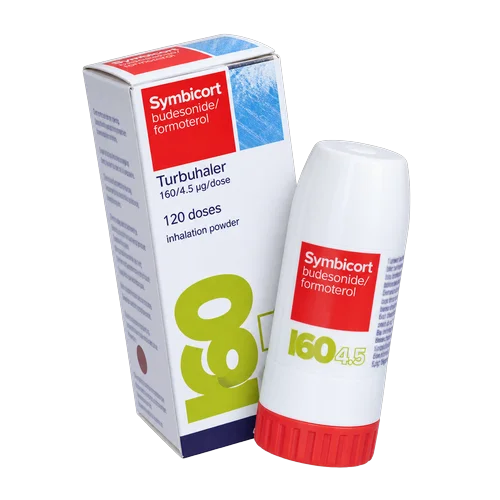
Symbicort
Budesonide, an inhaled corticosteroid, and formoterol, a long-acting bronchodilator, are the active ingredients in Symbicort. Symbicort Turbuhaler 160/4.5 is prescribed for selected asthma and…
Budesonide, an inhaled corticosteroid, and formoterol, a long-acting bronchodilator, are the active ingredients in Symbicort. Symbicort Turbuhaler 160/4.5 is prescribed for selected asthma and chronic obstructive pulmonary disease treatment plans. It reduces airway inflammation while relaxing bronchial muscles to support easier breathing.
Overview
Symbicort contains budesonide and formoterol fumarate dihydrate in an inhalation powder delivered through a Turbuhaler device. Each delivered dose contains 160 micrograms of budesonide and 4.5 micrograms of formoterol, with the device providing 120 doses.
What it is used for
Symbicort may be prescribed for asthma maintenance treatment or for selected adults with chronic obstructive pulmonary disease. The appropriate strength and regimen depend on diagnosis, symptom pattern, exacerbation history, age, lung function, and the local prescribing information.
Asthma Maintenance Treatment
In asthma, Symbicort can reduce airway inflammation and support bronchodilation. Some asthma plans use an inhaled corticosteroid with a LABA as regular maintenance treatment. Certain plans may also permit the same inhaler for symptom relief, but that approach is regimen-specific and must be explicitly prescribed.
Do not increase the frequency because symptoms are troublesome, and do not reduce treatment simply because breathing has improved. A sudden increase in wheezing, night-time symptoms, or rescue-inhaler use can indicate poor control and requires review of the asthma action plan.
Chronic Obstructive Pulmonary Disease Treatment
Chronic obstructive pulmonary disease, or COPD, causes persistent airflow limitation and may include chronic bronchitis symptoms. Symbicort can form part of a maintenance plan for selected patients with COPD, especially when airflow symptoms and exacerbation risk justify an inhaled corticosteroid plus long-acting bronchodilator approach.
Acute exacerbations of chronic bronchitis or COPD are different from stable maintenance treatment. Rapidly worsening breathlessness, blue lips, confusion, chest pain, or an inability to speak normally requires urgent medical assessment rather than repeated unscheduled doses of Symbicort.
Acute bronchitis alone does not automatically mean that Symbicort is appropriate.
Formulation
Symbicort contains budesonide and formoterol fumarate dihydrate in an inhalation powder delivered through a Turbuhaler device. Each delivered dose contains 160 micrograms of budesonide and 4.5 micrograms of formoterol, with the device providing 120 doses.
Budesonide is an inhaled corticosteroid. It reduces inflammation, swelling, and excess mucus activity inside the airways. Formoterol is a selective beta-2 adrenergic agonist and a long-acting beta-agonist, often shortened to LABA. It relaxes airway smooth muscle so air can move more freely.
A LABA is not a steroid. Symbicort combines two different pharmacological actions: one treats the inflammatory component of asthma or selected COPD treatment plans, while the other widens narrowed airways. This combination is described in approved product information from the European Medicines Agency [1].
The Turbuhaler is a dry-powder inhaler. It does not use a propellant. The dose is released when the user loads the device and inhales firmly and deeply through the mouthpiece.
Mechanism of action
Budesonide acts locally in the lungs by reducing inflammatory activity. Over time, this can lessen airway swelling and mucus production, helping reduce the tendency toward wheeze and variable airflow obstruction. It is a controller treatment rather than a substitute for an emergency plan during severe breathing difficulty. Its preventive benefit depends on regular use as prescribed. A clinician should review persistent symptoms or increasing rescue-inhaler use.
Formoterol activates beta-2 receptors on bronchial smooth muscle. The muscle relaxes, the airway diameter increases, and breathing may become less restricted. Its bronchodilator effect can begin relatively quickly, but the exact clinical response varies between patients and depends on the prescribed regimen.
The two ingredients address different parts of airway disease:
- Budesonide: reduces inflammation and airway sensitivity.
- Formoterol: relaxes airway muscle and supports bronchodilation.
- Symbicort: combines anti-inflammatory treatment with prolonged bronchodilation.
Improved breathing does not mean that prescribed controller treatment can be stopped without medical direction. Inhaled corticosteroids reduce inflammation even when symptoms are quiet, so symptom improvement and disease control are related but not identical.
How to use it
The Symbicort strength supplied for this page is 160/4.5, delivered through a Turbuhaler with 120 doses. Symbicort strengths differ in the amounts of budesonide and formoterol delivered per inhalation. The correct strength is selected by the prescriber, not chosen according to how severe symptoms feel on a particular day.
Dosing differs between strengths and between users, so there is no single amount that suits everyone. Follow the regimen prescribed for the diagnosis and treatment plan.
Correct Turbuhaler Technique
Use the device in this sequence:
- Remove the protective cover and hold the inhaler upright.
- Load one dose using the rotating grip until it clicks, following the device instructions.
- Breathe out gently away from the mouthpiece. Do not exhale into the inhaler.
- Place the mouthpiece between the teeth and close the lips around it.
- Inhale forcefully and deeply through the mouth.
- Remove the inhaler and hold the breath briefly if comfortable.
- Breathe out slowly.
- Rinse the mouth with water and spit it out after the prescribed inhalation.
A Turbuhaler needs an adequate inspiratory effort. A weak, hesitant breath may leave more powder in the mouth and less in the lungs. A periodic technique check can identify this problem even when the patient believes the inhaler is being used correctly.
Comparison
| Treatment approach | Main role and limitation |
|---|---|
| Symbicort combination inhaler | Anti-inflammatory control plus long-acting bronchodilation; technique and adherence both affect delivery |
| Inhaled corticosteroid alone | Treats airway inflammation; may provide less bronchodilation for patients who need both actions |
| Short-acting rescue bronchodilator | Rapid symptom relief in an action plan; does not replace anti-inflammatory control |
A short-acting rescue bronchodilator is designed for immediate symptom management when prescribed. Symbicort may be used as maintenance treatment and, in selected asthma regimens, as both maintenance and reliever therapy. The approved role varies by diagnosis, strength, age, and jurisdiction.
Inhaled corticosteroid monotherapy may be suitable for some patients with asthma. A combination treatment can offer broader control for others, yet it adds a second pharmacological component and may increase the chance of tremor, palpitations, or oral candidiasis.
COPD treatment decisions are also individual. Lung function, exacerbations, pneumonia risk, smoking exposure, eosinophil levels, symptoms, and inhaler technique can influence the plan. No inhaler combination is appropriate for every person with COPD.
Common mistakes
The most common mistakes include:
- Stopping regular doses when breathing improves.
- Taking an extra dose for sudden severe symptoms without an action-plan instruction.
- Exhaling into the Turbuhaler and moistening the powder.
- Failing to inhale firmly and deeply.
- Skipping mouth rinsing after use.
- Confusing maintenance treatment with emergency treatment.
- Changing the strength or frequency without a prescriber’s review.
- Keeping the device in a humid bathroom.
- Assuming an empty-feeling inhaler has no remaining doses without using the dose counter.
- Waiting several weeks with worsening symptoms instead of arranging a treatment review.
Patients sometimes worry that mouth rinsing means the medicine has failed to reach the lungs. It does not. The medicine intended for the lungs has already been inhaled; rinsing removes residue from the mouth and throat.
Who should not use it
Symbicort is not suitable for a person with severe hypersensitivity to budesonide, formoterol, or another ingredient in the inhaler. A previous serious allergic reaction after an inhaled medicine requires clinical review before treatment.
Symbicort is not a standalone treatment for status asthmaticus or another immediately life-threatening asthma attack. Status asthmaticus involves severe, persistent airway obstruction and requires urgent care.
Tell the prescriber about heart rhythm problems, high blood pressure, diabetes, thyroid disease, osteoporosis, low potassium, recurrent infections, glaucoma, cataracts, or previous tuberculosis. Formoterol can influence heart rate and potassium balance, while prolonged corticosteroid exposure can contribute to systemic effects in susceptible patients.
When this is not for you
This medication is not for you if:
- You have had severe hypersensitivity to budesonide or formoterol.
- You are experiencing severe breathlessness that prevents normal speech.
- You have blue lips, confusion, collapse, or rapidly worsening wheezing.
- You intend to replace an emergency inhaler or urgent medical treatment with unscheduled Symbicort doses.
- You have been told that a different inhaler regimen is required for your diagnosis.
Unwanted effects
Symbicort is generally used when the expected respiratory benefit justifies combination inhaled treatment, but it can cause unwanted effects. Headache, upper respiratory tract infection, nasopharyngitis, bronchitis, throat irritation, tremor, palpitations, and muscle cramps are recognised possibilities in product safety information [2].
Common Respiratory and General Effects
Upper respiratory tract infection and nasopharyngitis may cause a blocked or runny nose, sore throat, cough, or tiredness. Headache may occur, especially during treatment changes. Bronchitis symptoms can overlap with an asthma or COPD flare, so a new or worsening cough should not automatically be assumed to be a simple side effect.
Formoterol may produce tremor, a faster heartbeat, or a sensation of palpitations. These symptoms can be mild and temporary, but persistent, severe, or irregular heartbeats need medical review.
Oral Candidiasis Prevention
Inhaled corticosteroids can increase the risk of oral candidiasis, also called oral thrush. Typical signs include white patches, mouth soreness, burning, and altered taste. Rinsing the mouth and spitting after inhalation reduces medicine residue in the mouth and may lower this risk.
Hoarseness can also occur. It may improve with mouth rinsing, but persistent voice change or painful swallowing should be assessed.
Paradoxical Bronchospasm Warning
Paradoxical bronchospasm is a rare but serious reaction in which breathing becomes suddenly worse immediately after inhalation. Severe wheezing, rapidly increasing breathlessness, facial or throat swelling, faintness, or blue lips requires urgent medical attention.
Do not respond to sudden severe breathing difficulty by repeatedly taking extra Symbicort unless the prescribed written action plan specifically instructs that approach. Emergency treatment may be required.

What doctors say
In clinical practice, doctors often find that inhaler technique explains poor control more frequently than patients expect. A patient may take every prescribed dose but inhale too gently, exhale into the device, or fail to load the dose correctly.
A doctor would also look for preventable triggers, missed doses, smoking exposure, untreated nasal disease, reflux, infection, and the need for a revised asthma or COPD action plan. Better technique can improve lung delivery without increasing the prescribed amount.
What customers often ask
Which symptoms mean stopping Symbicort and seeking urgent medical help?
Sudden severe wheezing or rapidly worsening breathlessness after inhalation may indicate paradoxical bronchospasm and requires urgent assessment. Facial or throat swelling, faintness, blue lips, confusion, chest pain, or an inability to speak normally are emergency warning signs. EMA safety information reviewed in 2024 identifies hypersensitivity and paradoxical bronchospasm as clinically important reactions. Do not keep repeating doses during severe deterioration unless the prescribed action plan specifically directs it.
Can Symbicort affect driving, concentration, or work with machinery?
Symbicort is not expected to impair concentration in most users, but headache, tremor, dizziness, palpitations, or blurred vision can occur. Avoid driving or operating machinery if these symptoms affect your ability to function safely. The WHO medicine-safety principles reviewed in 2025 support checking individual response whenever a respiratory treatment is started or changed. Persistent dizziness or visual disturbance needs clinical review.
Is Symbicort suitable for older adults?
Older adults may use Symbicort when its benefits fit the asthma or COPD treatment plan. Age alone does not determine the dose, but heart rhythm disease, osteoporosis, diabetes, glaucoma, cataracts, kidney problems, and polypharmacy may affect monitoring. GOLD guidance published in 2025 stresses individual assessment of inhaler technique and comorbidities in older people with COPD. A slower inhalation may not deliver dry powder adequately, so technique should be observed rather than assumed.
How long does one Symbicort dose keep working?
Formoterol provides long-acting bronchodilation, while budesonide controls airway inflammation through regular use rather than acting as an instant anti-inflammatory rescue treatment. The practical duration depends on the prescribed regimen, airway disease, inhalation technique, and individual response. EMA product information reviewed in 2024 describes the pharmacological roles of both ingredients without making one fixed duration suitable for every patient. Do not shorten or extend the prescribed interval based only on how the chest feels.
Can Symbicort be used during pregnancy or breastfeeding?
Pregnancy and breastfeeding require an individual benefit-risk assessment because uncontrolled asthma also carries health risks. Budesonide has substantial inhaled-use experience, but the prescriber should review the full treatment plan, dose, and disease control. WHO antenatal-care recommendations published in 2016 support maintaining appropriate care during pregnancy rather than stopping treatment abruptly. Tell the prescriber about pregnancy, planned pregnancy, or breastfeeding before changing Symbicort.
What happens if Symbicort is stopped, and does it need tapering?
Stopping suddenly can allow airway inflammation and symptoms to return, especially when Symbicort has been controlling asthma or COPD symptoms. Some patients may require a planned step-down, while others need a different controller or rescue strategy. GINA guidance published in 2025 advises that asthma treatment reduction should follow sustained control and clinical review rather than symptom improvement on a single day. Do not stop or taper independently, and seek prompt assessment if wheezing or breathlessness increases after a missed dose.
Do you offer anonymous delivery?
Your order will be securely packed and shipped within 24 hours. This is exactly what your package will look like (images of an actual item sent). It has the size and look of a regular private letter (24x11x0.7 cm) and its contents cannot be seen.
Sources
- European Medicines Agency (2024). Symbicort Turbuhaler: Summary of Product Characteristics.
- U.S. Food and Drug Administration (2023). Symbicort (budesonide and formoterol fumarate dihydrate) Prescribing Information.