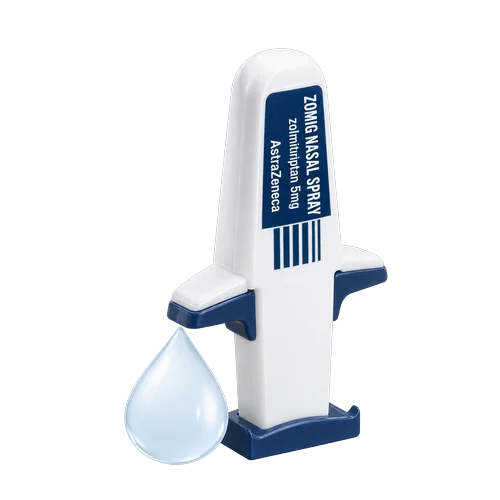
The spray helped when nausea made tablets difficult. I noticed a bitter taste and mild throat irritation, but both settled fairly quickly.
Madinat Zayed Two migraine attacks 29 Oct 2026
Zomig
Migraine attacks can cause severe head pain, nausea, vomiting, and sensitivity to light or sound. Zomig is used by adults during an acute migraine attack, and zolmitriptan targets serotonin receptors…
Migraine attacks can cause severe head pain, nausea, vomiting, and sensitivity to light or sound. Zomig is used by adults during an acute migraine attack, and zolmitriptan targets serotonin receptors involved in migraine pain.
Overview
Zomig contains zolmitriptan, a triptan for acute migraine treatment in adults. Its nasal spray delivers the medicine through the nose and acts on serotonin receptors involved in migraine pain.
What it is used for
It is used to treat an established migraine attack, with or without aura, rather than to prevent future attacks.
The medicine can reduce headache intensity and related symptoms such as nausea and vomiting when taken during an active episode.
Zomig treats the current attack. It does not remove the underlying tendency to develop migraine, and regular preventive treatment may be needed when attacks occur frequently.
Formulation
Zomig nasal spray contains zolmitriptan at a strength of 2.5 mg per dose. Zolmitriptan belongs to the triptan class, also called selective 5-HT1B/1D receptor agonists.
Mechanism of action
Migraine involves abnormal activity in the trigeminal nerve system and the release of inflammatory neuropeptides around cranial blood vessels. These changes contribute to pain, pressure, nausea, and sensitivity to light or sound. Zolmitriptan activates specific serotonin receptors on cranial blood vessels and trigeminal nerve endings. This reduces release of pain-signalling peptides and narrows dilated cranial vessels associated with the attack [1].
Role of Zolmitriptan in Cranial Vasoconstriction
Zolmitriptan does not act as a general painkiller. Its activity is directed toward migraine pathways involving the trigeminal nerve and serotonin signalling.
How to use it
The product presentation is a nasal spray delivering 2.5 mg of zolmitriptan per dose. It is intended for intranasal use, not for swallowing or application to the skin.
The nasal spray format has several practical features:
- It can be used during an acute migraine attack.
- It may be suitable when nausea interferes with tablets.
- It delivers zolmitriptan through the nasal cavity.
- Each device is designed for a measured dose.
- The dose decision should account for age, other medicines, cardiovascular history, kidney function, liver function, and previous response.
The nasal spray should not be treated as interchangeable with a tablet dose without clinical direction. Different formulations can have different absorption patterns and instructions.
A common mistake is to assume that a nasal spray works only when the nose feels blocked. Nasal congestion may affect comfort, but the medicine is intended for migraine treatment and should be used according to its clinical directions.
Zomig nasal spray is used at the start of the headache phase of a migraine. The dose is decided individually, taking age, other medicines, and health conditions into account.
Typical prescribing principles for adults include:
- Use one 2.5 mg nasal spray dose when the migraine headache begins.
- A second dose may be prescribed if the migraine returns or does not respond sufficiently.
- If a second dose is needed, it is generally separated from the first by at least two hours.
- The total amount used in 24 hours must remain within the prescribed maximum.
- Do not use Zomig for routine prevention before a migraine starts.
- Do not use another triptan during the same attack unless a prescriber has given clear instructions.
The FDA prescribing information sets a maximum total daily dose of 10 mg for zolmitriptan nasal spray, though individual treatment plans can be more restrictive [2]. A lower limit may apply when liver disease, interacting medicines, or cardiovascular risk factors are present.
If one dose fails to help a particular attack, taking repeated doses without a medical plan can increase adverse effects without reliably improving relief. A patient who has no meaningful response to several properly timed attacks may need a diagnosis review or a different acute strategy.
If a dose is missed, there is no need to take it later because Zomig is used for an active attack rather than on a fixed daily schedule. Do not use extra doses to compensate for a missed treatment opportunity.
Avoid using Zomig on more than 10 days per month unless a clinician has created a specific plan. Frequent use of acute migraine medicines can contribute to medication-overuse headache, in which headache becomes more frequent or persistent.

Comparison
Zomig belongs to the triptan class, but triptans are not identical. They differ in absorption, metabolism, duration, available routes, and how suitable they are for an individual patient.
| Treatment approach | Pharmacological profile | Practical distinction |
|---|---|---|
| Zolmitriptan nasal spray | 5-HT1B/1D agonist; intranasal delivery | Useful when nausea or vomiting makes oral treatment difficult |
| Oral triptan | 5-HT1B/1D agonist; gastrointestinal absorption | Convenient, though absorption may be delayed during an attack |
| Non-triptan acute treatment | May reduce pain through different pathways | May be selected when triptans are unsuitable or ineffective |
Zolmitriptan is sufficiently lipophilic to enter the central nervous system, which may contribute to activity within migraine pain pathways. The clinical effect still depends on timing, migraine biology, nasal administration, and individual response.
Triptans are usually preferred for moderate-to-severe migraine or for attacks that do not respond to simple analgesics. They are not automatically better for every headache. Tension-type headache, sinus-related facial pain, medication-overuse headache, and secondary headache disorders require different assessment.
The WHO describes migraine as a neurological disorder rather than a simple vascular headache, with recurrent attacks that may include nausea and sensory sensitivity [3]. This helps explain why a targeted serotonin medicine can work when a general painkiller provides incomplete relief.
Common mistakes
Several habits reduce the chance of useful migraine relief:
- Waiting until the headache becomes severe before using the prescribed dose.
- Repeating a dose too early because the first dose has not worked within minutes.
- Using Zomig for every type of headache without confirming the diagnosis.
- Combining it with another triptan or an ergot medicine.
- Forgetting to mention antidepressants, migraine supplements, or blood-pressure medicines.
- Treating a nasal spray like a tablet.
- Using acute migraine medicine on many days each month.
- Driving while dizzy or drowsy after the first few doses.
- Ignoring chest pressure because it resembles a familiar migraine symptom.
- Assuming that a bitter taste means the medicine has failed.
The onset of relief is not identical for every patient. The spray may begin helping within about 15 minutes, though a clear reduction in headache can take longer and varies by attack.
Alcohol can worsen dehydration, sleep disruption, and headache susceptibility. It may also make dizziness or drowsiness more noticeable after zolmitriptan. Regular sleep, hydration, meals, and moderate aerobic activity often support migraine control, though they do not replace acute treatment.
Who should not use it
- Ischaemic heart disease, coronary artery spasm, or previous myocardial infarction.
- Previous stroke or transient ischaemic attack.
- Peripheral arterial disease.
- Uncontrolled high blood pressure.
- Certain rare forms of hemiplegic or brainstem migraine unless a specialist has confirmed the diagnosis.
- Serious allergy to zolmitriptan.
- Significant liver impairment requiring dose adjustment or avoidance.
- Use of another triptan within the restricted interval.
- Use of an ergotamine-type medicine within the restricted interval.
- Treatment with a monoamine oxidase-A inhibitor without appropriate separation.
- A history of serious cardiovascular disease that has not been assessed.
Zomig should not be combined with another triptan for the same attack. Ergotamine and related medicines can also produce excessive vascular effects when used too close to zolmitriptan.
Some antidepressants, including selective serotonin reuptake inhibitors and serotonin-norepinephrine reuptake inhibitors, may increase the risk of serotonin syndrome when combined with a triptan. The combination is sometimes prescribed, but symptoms such as agitation, sweating, tremor, fever, or muscle rigidity need prompt medical assessment.
Cimetidine and some other medicines can alter zolmitriptan exposure. Moclobemide, a monoamine oxidase-A inhibitor, can also affect zolmitriptan levels. Medication review should include prescription medicines, over-the-counter painkillers, migraine products, and supplements.
The MHRA product information describes cardiovascular assessment as relevant before treatment in patients with risk factors such as smoking, diabetes, high cholesterol, obesity, or a strong family history of coronary disease [1].
When this is not for you
Zomig is not suitable for everyone. This treatment is NOT for you if you have cardiovascular disease, uncontrolled hypertension, a relevant prior stroke, or an unassessed contraindication; seek clinician assessment instead.
Unwanted effects
Most adverse effects of zolmitriptan are short-lived and relate to its action on blood vessels and sensory nerves. Clinical trials and regulatory information describe sensations involving the nose, throat, chest, neck, or limbs.
Possible effects include:
- Tingling or pins-and-needles sensations.
- Dizziness or drowsiness.
- Warmth, flushing, or pressure.
- Tightness in the throat, neck, chest, or jaw.
- Unusual taste or irritation in the nose.
- Dry mouth.
- Nausea.
- Temporary weakness or fatigue.
A bitter taste after nasal administration can occur. Drinking water after the taste develops may help, provided the person is alert and able to swallow normally. Dizziness can also occur, so driving or operating machinery should wait until the effect is clear.
Serious cardiovascular reactions are uncommon but clinically significant. Seek urgent care for severe or persistent chest pain, fainting, marked shortness of breath, sudden weakness on one side, difficulty speaking, or a new irregular heartbeat. The risk requires extra attention in people with coronary artery disease, uncontrolled hypertension, peripheral vascular disease, or a history of stroke or transient ischaemic attack.
Zolmitriptan can rarely cause serotonin syndrome when combined with other serotonergic medicines. Warning symptoms include agitation, confusion, fever, sweating, tremor, muscle stiffness, diarrhoea, and loss of coordination.
The nasal formulation can cause local irritation. Repeated discomfort, nosebleeds, or worsening nasal symptoms should be reported before further doses are used.
What doctors say
In clinical practice, physicians usually focus on three points before prescribing Zomig: whether the episodes are genuine migraine, whether cardiovascular risk has been assessed, and whether the patient can use the medicine early enough.
A doctor will often ask about aura, nausea, light sensitivity, duration, family history, and the number of headache days each month. A new headache pattern after age 50, a sudden thunderclap headache, fever with neck stiffness, new neurological weakness, or a headache after head injury requires urgent evaluation rather than routine self-treatment.
Treatment response should be judged across several attacks, not from one unusually severe episode. One ineffective dose does not prove that the whole triptan class will fail, but repeated non-response deserves review.
A practical prescribing decision also includes the route. Nasal zolmitriptan can make sense when oral medicines are repeatedly vomited, while another formulation may be more suitable when nasal irritation is troublesome.
The NICE headache guideline recommends reviewing acute treatment use and considering preventive therapy when migraine attacks are frequent or disabling [4]. A patient who needs acute medicine on many days each month may be treating the symptom pattern without addressing its frequency.
What customers often ask
How long does a Zomig treatment course last, and is long-term use acceptable?
Zomig is designed for individual migraine attacks, not as a fixed course taken every day. The FDA prescribing information (2016) supports use for acute attacks, while repeated frequent use can contribute to medication-overuse headache. NICE guidance (2025) supports reviewing preventive treatment when attacks become frequent. Long-term access to acute treatment can be appropriate when attacks remain occasional and the monthly use is monitored. Frequent attacks call for a review of preventive options and the diagnosis.
What should I do if the expected result does not come?
Do not take extra doses sooner than prescribed when the first spray has not helped. The MHRA product information (2016) advises reviewing the diagnosis, dose, timing, formulation, and interacting medicines when response is consistently inadequate. Keep a record of several attacks and discuss the pattern with the clinician managing the migraine. Urgent assessment is needed if the headache is sudden, unusual, or accompanied by neurological symptoms.
Which symptoms mean that Zomig should be stopped and a doctor contacted urgently?
Severe chest pain, fainting, major breathlessness, one-sided weakness, speech difficulty, or a new irregular heartbeat requires urgent medical attention. The MHRA product information (2016) identifies serious cardiovascular and neurological symptoms as reasons for immediate assessment rather than another dose. Agitation, fever, sweating, tremor, muscle stiffness, or confusion may indicate serotonin toxicity when serotonergic medicines are combined. Swelling of the face or throat and difficulty breathing may indicate a serious allergic reaction.
Which diet, exercise, or habits help or hinder the result?
Regular meals, adequate fluids, stable sleep, and gradual aerobic exercise can reduce common migraine triggers for some people. The WHO (2023) identifies sleep disturbance, stress, and sensory triggers among factors that may contribute to migraine attacks, although individual triggers differ. Alcohol, skipped meals, dehydration, and sudden changes in caffeine intake may worsen susceptibility. A diary can reveal personal patterns more reliably than a universal food-avoidance list.
Do you offer anonymous delivery?
Your order will be securely packed and shipped within 24 hours. This is exactly what your package will look like (images of an actual item sent). It has the size and look of a regular private letter (24x11x0.7 cm) and its contents cannot be seen.
Comparison
Migraine: all medicines side by sideSources
- MHRA (2016). Zomig Nasal Spray 2.5 mg: Summary of Product Characteristics
- U.S. Food and Drug Administration (2016). Zomig Nasal Spray: Prescribing Information
- World Health Organization (2023). Headache disorders: Fact sheet
- National Institute for Health and Care Excellence (2025). Headaches in over 12s: diagnosis and management, guideline CG150