The ointment was easy to spread and the area stayed protected under a light dressing. I initially applied too much, which made the dressing greasy, so I used less after that.
Al Majaz Several days 27 Oct 2026
Betadine
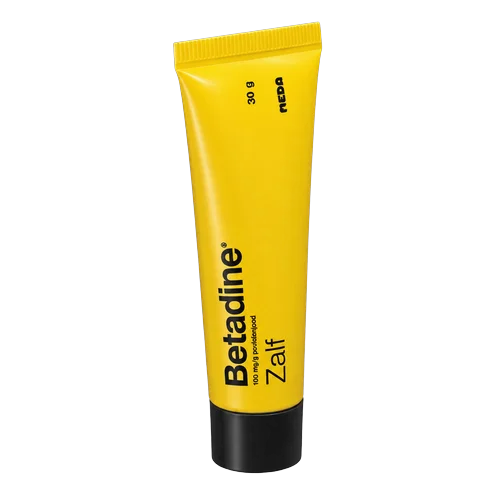
People needing topical care for minor skin injuries may use Betadine as an ointment for external application. The 30 g tube is intended for localized skin use, with the amount and frequency selected…
People needing topical care for minor skin injuries may use Betadine as an ointment for external application. The 30 g tube is intended for localized skin use, with the amount and frequency selected according to the purpose of treatment and agreed with a doctor or pharmacist.
Overview
Betadine is supplied as an ointment in a tube containing 30 g. Its route of administration is topical, meaning it is applied to the skin rather than swallowed, inhaled, or injected.
What it is used for
Betadine ointment may be selected for external skin care involving:
- Minor cuts and superficial abrasions
- Small areas of damaged skin
- Limited superficial wounds
- Minor burns when a suitable topical antiseptic has been chosen
- Localized skin areas requiring short-term antiseptic care
A pharmacist or doctor would normally decide whether the product is suitable by considering the wound type, area, duration, medical history, and other topical or systemic treatments. The choice is based on the wound, not simply on how much ointment can be applied.
Formulation
Betadine is supplied as a topical ointment in a 30 g tube. The available product information does not specify its active ingredient or full composition.
Mechanism of action
Topical antiseptics are used to reduce microbial contamination on the skin surface. Cleaning the area and using an appropriate topical preparation can support basic wound care.
WHO wound-care guidance emphasizes cleaning, protection, and assessment of wound severity as core elements of safe care [1].
How to use it
The amount of Betadine used depends on the purpose of treatment, the size of the affected area, and the condition of the skin. The frequency and duration are agreed with a doctor or pharmacist.
For localized external use:
- Clean the affected skin gently.
- Dry the surrounding skin without rubbing the wound.
- Apply a small, even amount to the intended area.
- Avoid contact with the eyes, inside of the mouth, and other unintended surfaces.
- Wash hands after application unless the hands are being treated.
- Use a light covering only when it has been recommended or is needed to reduce friction.
- Stop routine self-treatment and seek medical assessment if the wound worsens or fails to improve.
Do not share the tube between people. Sharing can transfer microorganisms from one person’s skin to another. Do not dilute the ointment, mix it with another topical preparation, or apply it inside a sealed dressing unless a clinician has specifically directed this.
If an application is missed, apply the next planned amount when practical. Do not compensate by applying a thick layer.
Comparison
Betadine belongs to the topical antiseptic category. Other approaches serve different purposes and should not be treated as interchangeable.
| Approach | Main purpose | Main limitation |
|---|---|---|
| Betadine ointment | Localized topical antiseptic care | Not suitable for every wound or large skin area |
| Sterile saline or clean water | Physical cleansing and removal of surface debris | Does not provide prolonged antiseptic activity |
| Plain protective ointment | Reduces friction and limits drying | Does not provide antiseptic action |
For a clean, uncomplicated superficial abrasion, gentle cleansing and protection may be sufficient. An antiseptic ointment may be selected when local antiseptic care is clinically appropriate. Deep wounds, infected wounds, extensive burns, and contaminated injuries need assessment rather than escalation of home application.
Common mistakes
Several habits can delay healing or increase irritation:
- Applying a thick layer several times daily without a defined treatment purpose.
- Using the ointment before removing visible dirt or debris.
- Covering the area tightly and leaving a wet dressing in place.
- Applying the product to the eyes or inside the mouth.
- Mixing several antiseptics on the same wound.
- Continuing self-treatment despite spreading redness, pus, fever, or increasing pain.
- Using the same tube for several people.
- Applying ointment to a deep puncture or bite instead of obtaining wound assessment.
- Treating a chronic ulcer as though it were a new minor cut.
- Forgetting to mention topical iodine exposure before thyroid investigations or relevant treatment.
A common mistake is judging success by the appearance of the ointment rather than by the wound. A coloured or greasy surface does not prove that the injury is healing.
Another is treating every burn in the same way. A small superficial burn differs from a blistering, deep, chemical, electrical, facial, hand, genital, or extensive burn. The latter situations need medical evaluation.
Who should not use it
- You have previously had an allergic or severe skin reaction to Betadine or any ingredient in the ointment.
- The product is intended for the eyes, inside the mouth, or another mucosal surface without specific clinical instructions.
- You plan to use it on a deep, extensive, heavily contaminated, or severely burned area without medical assessment.
- The wound is caused by a bite, has separated edges, or contains a foreign object.
- You intend to apply it repeatedly over a large area.
- You have thyroid disease, significant kidney disease, or are receiving treatment affected by iodine exposure and have not discussed topical iodine exposure with a clinician.
- The patient is a newborn, very young child, pregnant, or breastfeeding and prolonged or extensive use is being considered.
People using lithium, receiving thyroid-related treatment, or undergoing thyroid testing should mention topical iodine preparations to their doctor.
Do not combine Betadine with other antiseptics, hydrogen peroxide, strong oxidising products, or medicated creams on the same area unless a doctor or pharmacist has confirmed compatibility.
When this is not for you
Betadine ointment is not suitable for you if:
- You have previously had an allergic or severe skin reaction to Betadine or any ingredient in the ointment.
- You plan to use it on a deep, extensive, heavily contaminated, or severely burned area without medical assessment.
- The wound is caused by a bite, has separated edges, or contains a foreign object.
- You intend to apply it repeatedly over a large area.
- The patient is a newborn, very young child, pregnant, or breastfeeding and prolonged or extensive use is being considered.
People with diabetes, poor circulation, reduced sensation, immune suppression, or a history of slow wound healing need a lower threshold for medical review.
Unwanted effects
The skin around a minor wound may become mildly dry, tight, or irritated during treatment. Some people can also develop contact sensitivity to topical antiseptic preparations. Stop applying the ointment and arrange prompt medical advice if there is rapidly increasing redness, swelling, blistering, severe itching, facial swelling, or breathing difficulty.
A wound that becomes more painful after initial care deserves attention. The same applies to spreading redness, warmth, pus, an unpleasant odour, fever, red streaking, or reduced function of the nearby finger, toe, hand, or joint.
The EMA’s general approach to topical medicines supports attention to local reactions and clinically significant worsening rather than prolonged unsupervised use [2].
What doctors say
In clinical practice, doctors tend to focus first on wound depth, contamination, bleeding, circulation, and signs of infection. The name of the antiseptic is only one part of the decision.
A doctor would usually expect a minor superficial wound to show gradual improvement in pain, redness, and surface appearance. Continued deterioration suggests that the wound needs reassessment rather than more frequent application.
Doctors also pay attention to exposure. A small amount on a small intact-skin area is different from repeated use over broken skin, a large burn, or a body area covered by an occlusive dressing. Absorption and irritation become more relevant as exposure increases.
For older adults and people with diabetes, circulation problems, or reduced sensation, clinicians often recommend earlier review. These patients may not feel worsening inflammation clearly, and the visible wound can underestimate the underlying problem.
The WHO’s infection-prevention guidance supports hand hygiene, clean wound care, and appropriate escalation when local treatment is insufficient [3].

What customers often ask
Can I use Betadine while exposed to the sun?
Direct sun exposure is not the main application issue for a small treated area, but irritation or redness can become harder to distinguish from sunburn. WHO guidance published in 2016 supports protecting healing skin from avoidable irritation and contamination. Cover the area with clothing or a suitable light dressing when practical, rather than applying extra ointment as a sun barrier. Betadine ointment is not a sunscreen. Keep the treated area protected from avoidable friction and contamination.
Is Betadine suitable for older adults?
Older adults can use topical treatments when the wound and medical history make them appropriate, but age-related skin fragility can increase irritation and slow healing. NICE guidance published in 2020 stresses careful assessment of wounds in people with chronic disease, reduced mobility, or impaired circulation [4]. Extra caution applies when the person has diabetes, reduced sensation, kidney disease, thyroid disease, or takes several medicines. A wound on the foot, lower leg, or pressure area should receive earlier clinical attention if healing is slow.
What should I do if the expected result does not come?
If pain, redness, swelling, discharge, warmth, or wound size increases, stop relying on repeated topical applications and arrange medical assessment. WHO guidance published in 2009 treats worsening local signs and systemic symptoms as reasons to reassess wound management. Medical review is also appropriate when a minor wound shows no clear improvement within the expected healing period or repeatedly reopens. Seek urgent care for uncontrolled bleeding, severe pain, fever, red streaking, loss of movement, or reduced sensation.
How much Betadine should I apply, and should I wash my hands or cover the area?
The amount and frequency depend on the purpose of use and are agreed with a doctor or pharmacist. Apply only enough to create a light covering over the intended area after gentle cleaning, rather than building up a thick layer. The NHS advice on minor wounds, updated in 2023, supports hand hygiene before and after wound care [5]. A light dressing may be used when recommended or when friction could disturb the wound; avoid tight, sealed coverings unless specifically directed.
Can I use Betadine with cosmetics, sunscreen, or another topical product?
Keep cosmetics, moisturisers, sunscreen, and other medicated creams away from the treated wound unless a doctor or pharmacist has confirmed that they can be used together. The EMA’s 2018 guideline on quality and equivalence of topical products supports checking compatibility before combining topical products. Apply different products at separate times only when a clinician has given a clear plan. Do not mix them in the tube or apply one immediately over the other without checking compatibility.
What should I discuss with a doctor before starting Betadine?
Mention thyroid disease, kidney disease, lithium treatment, previous reactions to topical antiseptics, pregnancy, breastfeeding, and the patient’s age. The FDA’s topical antiseptic safety information from 2019 supports reviewing the treated area, duration, and history of sensitivity before repeated or extensive use. Describe whether the injury is a cut, puncture, bite, burn, ulcer, or chronic wound. Also mention any antiseptic, antibiotic, steroid, or dressing already used on the area.
Can I drink alcohol while using Betadine?
A small amount of alcohol does not create the same interaction concern as drinking an oral medicine, because Betadine is applied to the skin. Still, alcohol can impair judgement and make it easier to overlook wound cleaning, excessive bleeding, or signs of infection. WHO first-aid guidance from 2014 supports keeping wound care focused on cleaning, protection, and observation. Do not pour alcoholic drinks or household alcohol onto the wound, and avoid drinking if you are injured, dizzy, bleeding, or taking other medicines affected by alcohol.
Do you offer anonymous delivery?
Your order will be securely packed and shipped within 24 hours. This is exactly what your package will look like (images of an actual item sent). It has the size and look of a regular private letter (24x11x0.7 cm) and its contents cannot be seen.
Comparison
Antiseptics: all medicines side by sideSources
- World Health Organization (2016). Global guidelines for the prevention of surgical site infection
- European Medicines Agency (2018). Guideline on quality and equivalence of topical products
- World Health Organization (2009). WHO Guidelines on Hand Hygiene in Health Care
- NICE (2020). Leg ulcer infection: antimicrobial prescribing
- NHS (2023). Cuts and grazes