Skip to content
Fast & Discrete Delivery Save up to 80%
In stock Neem
Antiseptics

Neem

Neem’s botanical compounds are used in oral tablets aimed at skin wellness, including support for acne-prone skin. Neem is intended for adults seeking a plant-based option based on traditional…

Guaranteed quality Original product
Delivery: from 4 days Discreet shipping
24/7 Support Always available
Active ingredient: Neem
Select pack Package Per unit Price
AED 2.76 AED 497.50
Best value AED 1.67 AED 995.00 AED 600.98 Save 40%

Free delivery on orders from AED 796.00, free express delivery from AED 1,194.00

Secure payment methods:
VISA AMEX JCB DISCOVER

Neem’s botanical compounds are used in oral tablets aimed at skin wellness, including support for acne-prone skin. Neem is intended for adults seeking a plant-based option based on traditional Ayurvedic use. Its main role is supportive, not a replacement for prescribed acne treatment.

Overview

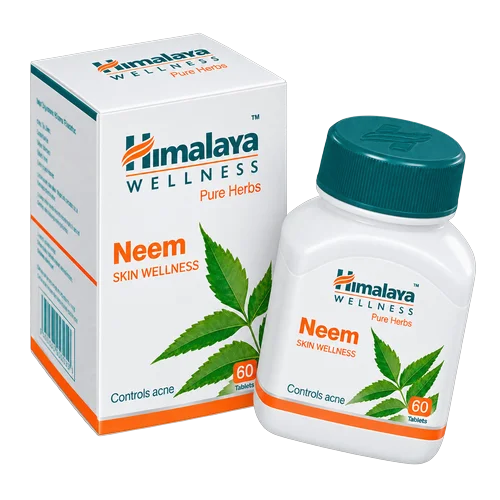
Neem tablets contain neem, the botanical material obtained from Azadirachta indica, a tree long used in Ayurveda. The product is supplied as tablets, with 60 tablets per pack, and is positioned for skin wellness and acne support.

Neem is used here as a tablet for oral administration. It is not a horticultural product or a preparation for growing a neem tree.

Traditional plant use and modern clinical evidence are not identical categories [1].

What it is used for

For acne-prone skin, the proposed rationale is supportive. Inflammation, excess oil, blocked follicles, and bacterial activity can all contribute to breakouts.

Potential traditional applications include:

  • Supporting the care of acne-prone skin.
  • Complementing a routine for oily or blemish-prone skin.
  • Providing a plant-based oral option associated with Ayurvedic practice.

One limitation is that evidence for oral neem tablets remains limited and product composition can vary.

  • Supporting general skin and hair health as part of personal care.
  • Contributing antioxidant and anti-inflammatory phytochemicals to the diet.

A 2016 review in Evidence-Based Complementary and Alternative Medicine described neem’s phytochemistry and traditional applications while also emphasising the need for better clinical evidence [2]. That distinction matters: a plausible mechanism supports further study, but it does not establish a guaranteed result for every user.

Formulation

Neem tablets contain neem, the botanical material obtained from Azadirachta indica. The product is supplied as tablets for oral administration and is positioned for skin wellness, including support for acne-prone skin. Neem is a plant-based product associated with traditional Ayurvedic use; evidence for oral neem tablets remains limited, and composition may vary between products.

Mechanism of action

Laboratory studies describe several biological activities associated with Azadirachta indica. These include antiseptic, antiviral, and anti-inflammatory properties in experimental settings. Such findings help explain why neem has been used traditionally for skin and hair health, yet laboratory activity does not prove that oral tablets will treat an infection or clear acne on their own.

Neem compounds have been studied for effects relevant to inflammation and microbial growth, but the strength of evidence varies by extract, preparation, and condition.

How to use it

  • Swallow the tablets with water.
  • Use the confirmed schedule consistently.
  • Do not take extra tablets to compensate for a missed dose.
  • If a dose is missed, follow the agreed dosing plan rather than doubling the next intake.
  • Keep the tablets away from excessive heat and moisture.
  • Stop and seek medical advice if a significant reaction develops.

The pack contains 60 tablets, but pack size does not determine the correct daily intake or the appropriate length of use. A course may depend on the person’s age, skin condition, other medicines, and the specific regimen selected by a qualified healthcare professional.

Do not switch between neem tablets, neem oil, and concentrated herbal extracts as though they were the same product. Their routes of administration and exposure can differ substantially.

One common practical mistake is expecting visible skin changes after only a few days. Acne develops through several processes, so a skin routine needs time to show whether it is helping. New or worsening lesions should not be covered up by extending the course without review.

Comparison

Approach Main principle Typical role
Neem tablets Botanical phytochemicals associated with traditional skin use Supportive wellness approach for adults
Topical acne treatment Direct action on follicles, oil production, inflammation, or bacteria More targeted care for active acne
Prescription oral treatment Systemic pharmacological action under medical supervision Moderate-to-severe acne or persistent disease

Topical treatment is usually more direct because it reaches the skin surface and follicles. Neem tablets may appeal to adults who prefer a botanical option, but the clinical evidence is less established than for standard acne therapies.

Prescription treatment becomes more relevant when acne is painful, widespread, scarring, or resistant to routine care. Oral neem should not be combined with several new products at once if the aim is to understand what is helping or causing irritation.

Common mistakes

  • Starting without confirming the regimen for the chosen tablet strength.
  • Taking extra tablets after a missed intake.
  • Combining neem with several new supplements at the same time.
  • Assuming tablets and neem oil have identical effects.
  • Continuing despite facial swelling, breathing symptoms, or a widespread rash.
  • Giving the tablets to a child without paediatric advice.
  • Using neem as the only response to severe or scarring acne.
  • Stopping prescribed acne treatment without a clinical reason.
  • Expecting immediate improvement and changing products every few days.
  • Ignoring possible blood-glucose effects while using diabetes medicines.

One detail patients often miss is the difference between skin support and infection treatment. Redness around a spot does not automatically mean that an oral botanical tablet can treat the cause. A painful, hot, expanding area may require prompt medical assessment.

Another practical issue is product stacking. Neem, concentrated herbal blends, and other skin supplements may share biological effects, making digestive symptoms or allergic reactions harder to trace.

Who should not use it

Specific situations requiring medical review include:

  • Pregnancy or trying to conceive.
  • Breastfeeding.
  • Childhood or adolescence without paediatric guidance.
  • Liver disease or a history of unexplained abnormal liver tests.
  • Kidney disease.
  • Diabetes treated with glucose-lowering medicines.
  • Fertility treatment or plans for conception.
  • Autoimmune disease or treatment that alters immune activity.
  • A history of severe reactions to herbal products.
  • Use of multiple prescription medicines.

Neem may affect blood glucose in some experimental and clinical contexts, creating a concern for people using insulin or other glucose-lowering treatment. It may also interact with medicines through effects on drug metabolism, although the clinical relevance depends on the extract and the medicine involved. Do not use it as a substitute for diabetes treatment.

Pregnancy deserves special caution. Neem preparations have been studied in relation to reproductive effects, and oral use during pregnancy should be avoided unless a qualified clinician has made a specific decision. The same applies during breastfeeding because reliable information about transfer and infant exposure is limited.

The World Health Organization has highlighted the need for careful evaluation of medicinal plants, including their preparation, dose, and safety profile [3].

When this is not for you

Neem is not suitable for everyone. This product is not for you if a healthcare professional has advised against neem, if you have had a previous reaction to neem, or if you cannot confirm that oral herbal use is appropriate for your medical situation.

Unwanted effects

Neem is a botanical product, and botanical does not mean free from adverse effects. Possible problems include stomach discomfort, nausea, loose stools, headache, dizziness, or an allergic reaction. Skin symptoms may include itching, redness, swelling, or a new rash.

Stop the tablets and obtain prompt medical attention for facial swelling, breathing difficulty, fainting, severe vomiting, yellowing of the skin or eyes, dark urine, or intense abdominal pain. These symptoms require assessment rather than continued self-treatment.

Children are more vulnerable to serious toxicity from neem oil ingestion. Neem tablets should not be given to a child unless a paediatric clinician has specifically assessed the product and regimen. Neem oil poisoning is a different exposure from tablet use, but it illustrates why neem preparations should not be treated as interchangeable.

Some users may notice digestive discomfort during the first days. Taking the tablet with water and avoiding simultaneous introduction of several new supplements can make it easier to identify intolerance. Do not take an additional dose because a skin flare has not improved immediately.

A spreading rash, swelling of the lips, or wheezing after a tablet is an urgent warning sign. Do not take another dose while waiting for symptoms to settle.

What doctors say

In clinical practice, a doctor would usually frame neem as an adjunctive wellness product rather than a first-line treatment for significant acne. The priority is to determine whether the skin problem is acne, folliculitis, eczema, rosacea, or another condition that needs different care.

A clinician would also ask about current medicines, pregnancy status, diabetes, liver health, and previous reactions to herbal products. This is more useful than judging a plant product by its traditional reputation alone.

The main potential advantage is its familiar botanical background and focus on skin wellness. The main limitation is the lack of a predictable, standardised acne outcome across all neem preparations. A person with mild blemishes may choose supportive care, while someone with nodules, scarring, or rapidly worsening inflammation needs targeted assessment.

Neem tablets should not be added to an established treatment plan without checking for interaction risks. A doctor may also recommend a simpler approach if several supplements are already being used.

What customers often ask

How does Neem differ from a targeted acne treatment?

Neem provides botanical compounds associated with traditional skin use, while targeted acne treatments are designed to act on specific processes such as follicular blockage, inflammation, or bacterial activity. The American Academy of Dermatology described evidence-based acne therapies in its 2024 guidance, with treatment choice based on severity and lesion type. Neem may be used as supportive skin wellness care, but it does not have the same treatment role as a prescribed acne medicine. The difference is mechanism, evidence strength, and clinical purpose. Clinical review remains appropriate when acne is persistent or scarring.

What happens after stopping Neem, and is tapering needed?

Stopping a neem tablet regimen does not usually require a taper in the way that some corticosteroids or psychiatric medicines may require gradual reduction. The European Medicines Agency’s 2017 guideline on European Union herbal monographs describes how safety and efficacy are assessed for traditional herbal medicinal products. Skin benefits, if experienced, may gradually fade when supportive use stops, while an underlying acne tendency can remain. Do not restart or increase the product after stopping without confirming the regimen again.

Can people under 18 use Neem?

Use in anyone under 18 should be decided by a paediatric clinician because age, body size, medical history, and the cause of the skin problem all matter. WHO guidance on safety monitoring of herbal medicines, published in 2004, supports careful assessment when herbal products are used in children and adolescents. Neem oil exposure is associated with serious toxicity in children, so neem preparations should never be exchanged casually. A young person with persistent acne may need a treatment selected specifically for adolescent skin.

How long does a Neem course last, and is long-term use acceptable?

There is no universal course length for neem tablets because the suitable duration depends on the product regimen, the purpose of use, and the person’s response. WHO herbal-medicine safety principles published in 2004 support periodic review when a plant product is used beyond a short course. Long-term use should not continue automatically if there is no clear benefit or if new symptoms appear. Confirm the intended duration with a healthcare professional before starting.

Can older adults use Neem?

Older adults may be able to use neem, but age-related changes in liver and kidney function can affect tolerance and interaction risk. WHO guidance on safety monitoring of herbal medicines, published in 2004, supports medication review for people taking several medicines. Particular care is needed with diabetes treatment, blood-pressure medicines, anticoagulants, and medicines processed by the liver. An older adult should have the complete medicine and supplement list reviewed before beginning.

What should be discussed with a doctor before starting Neem?

Discuss pregnancy or breastfeeding, allergies, liver or kidney disease, diabetes, autoimmune conditions, and every prescription or non-prescription product being used. The European Medicines Agency’s 2017 guideline on European Union herbal monographs places preparation, exposure, contraindications, and interactions at the centre of safety evaluation. Explain whether the goal is mild skin support or treatment of active acne, because severe or scarring acne needs a different plan. Confirm the regimen for the chosen strength before the first tablet.

Do you offer anonymous delivery?

Your order will be securely packed and shipped within 24 hours. This is exactly what your package will look like (images of an actual item sent). It has the size and look of a regular private letter (24x11x0.7 cm) and its contents cannot be seen.

Comparison

Antiseptics: all medicines side by side

Customer Feedback on Neem

Based on 3 reviews

Vikram, 64 Verified
Rating: 3 out of 5

I took them as part of a wider skin routine for several weeks. My skin felt less oily, but the change was gradual, and I still needed my usual cleanser. I had mild stomach discomfort during the first few days.

Jebel Ali Several weeks 29 Oct 2026
Mohammed, 53 Verified
Rating: 2.5 out of 5

I chose neem because I preferred a plant-based option. I did not see a dramatic change in the first week, although my skin seemed calmer later. I stopped after developing itching and discussed it with a clinician.

Liwa 30 Sep 2026
Yousef, 31 Verified
Rating: 3.5 out of 5

The tablets fitted easily into my routine, and I noticed fewer small breakouts after continued use. They did not help a painful flare on my jaw, so I needed a more targeted acne treatment. That was the main limitation for me.

Ras Al Khaimah After continued use 20 Oct 2026

Sources

  1. World Health Organization (2009). WHO monographs on selected medicinal plants, Volume 4.
  2. Alzohairy, M. A. (2016). Therapeutics Role of Azadirachta indica (Neem) and Their Active Constituents in Diseases Prevention and Treatment.
  3. World Health Organization (2004). WHO Guidelines on Safety Monitoring of Herbal Medicines in Pharmacovigilance Systems.
Get our free app Shop faster and track your orders 3.4 · 316 reviews Install