Skip to content
Fast & Discrete Delivery Save up to 80%
In stock Colchicine
Gout

Colchicine

Colchicine 500 microgram tablets are taken by mouth for gout flares, gout-flare prevention, and familial Mediterranean fever. It reduces inflammation by limiting neutrophil movement and inflammasome…

Guaranteed quality Original product
Delivery: from 4 days Discreet shipping
24/7 Support Always available
Active ingredient: Colchicine
Select pack Package Per unit Price
AED 7.30 AED 437.80
AED 6.01 AED 656.70 AED 541.28 Save 18%
AED 5.34 AED 875.60 AED 640.78 Save 27%
Free Regular Delivery AED 4.73 AED 1,313.40 AED 851.72 Save 35%
Free Regular Delivery AED 4.27 AED 1,970.10 AED 1,154.20 Save 41%
Best value Free Express Delivery AED 4.08 AED 2,626.80 AED 1,468.62 Save 44%

Free delivery on orders from AED 796.00, free express delivery from AED 1,194.00

Secure payment methods:
VISA AMEX JCB DISCOVER

Colchicine 500 microgram tablets are taken by mouth for gout flares, gout-flare prevention, and familial Mediterranean fever. It reduces inflammation by limiting neutrophil movement and inflammasome signalling, rather than lowering uric acid directly.

Overview

Colchicine contains colchicine, an anti-inflammatory medicine derived from Colchicum autumnale. Its established uses include acute gout flares, prevention of recurrent gout flares, and familial Mediterranean fever (FMF).

What it is used for

Colchicine contains colchicine, an anti-inflammatory medicine derived from Colchicum autumnale. Its established uses include acute gout flares, prevention of recurrent gout flares, and familial Mediterranean fever (FMF). The United States Food and Drug Administration recognises these clinical indications, while rheumatology guidance places colchicine within a wider gout-management plan that may also include urate-lowering treatment [1].

Gout management and flare prevention

During a gout flare, monosodium urate crystals activate immune cells inside a joint. Colchicine reduces the inflammatory response to those crystals. It does not remove uric acid from the blood and does not replace long-term urate-lowering treatment such as allopurinol.

Colchicine may be used in two different ways:

  • Acute treatment: taken early during a flare to reduce inflammation, pain, swelling, and tenderness.
  • Flare prevention: used for a defined period when starting or adjusting allopurinol or another urate-lowering treatment.
  • Repeated flare management: considered when gout attacks recur and the prescriber judges colchicine suitable.

The regimen for this 500 microgram tablet strength must be confirmed with a healthcare professional before starting. Colchicine has a narrow safety margin, so taking extra tablets to obtain faster relief can cause serious poisoning.

If a gout flare is being treated, contact the prescriber early rather than waiting several days. Colchicine is generally most useful when started promptly, and repeated doses must follow the prescribed regimen.

Familial Mediterranean fever protocol

FMF is an inherited autoinflammatory condition that can cause recurrent fever, abdominal pain, chest pain, joint inflammation, and inflammation around internal organs. Regular colchicine reduces attacks in many patients and helps lower the risk of amyloidosis, a complication caused by abnormal protein deposits.

Treatment for FMF is usually scheduled rather than taken only when symptoms appear. Missing doses can allow inflammation to return even when the patient feels well. The suitable daily regimen depends on age, kidney function, liver function, pregnancy status, and response to treatment.

Formulation

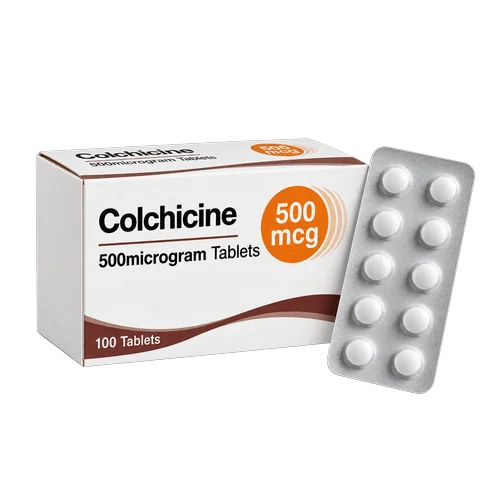
Colchicine tablets contain colchicine, an anti-inflammatory medicine derived from Colchicum autumnale. The 500 microgram strength is taken by mouth for acute gout flares, prevention of recurrent gout flares, and familial Mediterranean fever. It works by limiting neutrophil movement and inflammasome signalling rather than lowering uric acid directly.

Mechanism of action

Colchicine enters inflammatory cells and binds to tubulin, a protein required to form microtubules. Microtubules act like internal tracks that help neutrophils move, change shape, and release inflammatory substances. By disrupting this process, colchicine reduces the migration of neutrophils toward urate crystals.

The medicine also affects signalling linked with the NLRP3 inflammasome. This immune complex contributes to the release of interleukin-1β, a cytokine strongly involved in gout inflammation. Reduced neutrophil activity and lower interleukin-1β signalling help explain why colchicine can calm an attack without directly changing uric acid concentration.

Pharmacological feature Clinical meaning
Tubulin binding Limits microtubule activity inside inflammatory cells
Neutrophil inhibition Reduces movement of immune cells into inflamed joints
NLRP3 and interleukin-1β signalling Dampens part of the inflammatory cascade

How to use it

Colchicine tablets are taken orally.

The regimen for the 500 microgram strength is confirmed with a healthcare professional before starting because the correct schedule changes according to the indication and the patient’s kidney, liver, and interacting medicines.

Key administration principles include:

  • Take the prescribed number of tablets at the prescribed times.
  • Swallow tablets with water.
  • Food may be used if the medicine causes stomach upset, unless the prescriber gives different instructions.
  • Do not take extra tablets during a flare without specific instructions.
  • Do not double the next dose after a missed dose unless a prescriber has directed this.
  • Keep a written record when a course involves several doses over a short interval.
  • Report persistent diarrhoea, vomiting, marked weakness, or muscle pain rather than treating these symptoms by taking more medicine.

A missed dose requires an indication-specific decision. For a scheduled preventive regimen, the next dose may be taken when remembered if it is not close to the next scheduled dose. For an acute flare regimen, repeating or adding doses can be unsafe, so the prescriber’s instructions take priority.

Count the total tablets taken in the previous 24 hours before considering another dose. This simple step can prevent accidental double-dosing when pain, poor sleep, or several medicines make the schedule difficult to remember.

Comparison

Colchicine belongs to a different pharmacological category from medicines that lower uric acid or suppress inflammation through other pathways.

Approach Main role
Colchicine Controls inflammation linked with gout crystals and supports FMF control
Allopurinol-based urate lowering Reduces uric acid production for long-term gout prevention
Corticosteroid treatment Suppresses inflammation during selected acute attacks

Colchicine can be paired with allopurinol because the two medicines address different parts of gout. Colchicine reduces inflammatory activity, while allopurinol lowers uric acid production over time. A patient should not judge allopurinol failure by the presence of an early flare; attacks can occur while urate levels are being brought under control.

Corticosteroids may be selected when colchicine is unsuitable because of kidney impairment, interacting medicines, intolerance, or clinical circumstances. The choice depends on the joint involved, the number of affected joints, infection risk, diabetes, blood pressure, and previous treatment response.

Common mistakes

Several avoidable errors reduce benefit or increase risk:

  • Taking additional tablets because joint pain remains severe.
  • Using colchicine as a substitute for allopurinol or another urate-lowering plan.
  • Restarting an old regimen without reviewing current kidney function.
  • Forgetting to mention colchicine before receiving clarithromycin or another interacting medicine.
  • Continuing the drug through severe diarrhoea or vomiting.
  • Combining it with grapefruit juice after assuming food interactions are irrelevant.
  • Ignoring new muscle weakness when also taking a statin.
  • Sharing tablets with a family member who has similar-looking joint pain.
  • Assuming a missed dose should automatically be doubled.

A common misconception is that stronger gastrointestinal symptoms show that colchicine is working better. They do not. Increasing diarrhoea or vomiting may signal excessive exposure and requires prompt medical attention.

Who should not use it

Situations requiring avoidance or specialist assessment

Colchicine should not be used with strong CYP3A4 or P-glycoprotein inhibitors when kidney or liver function is impaired. It also requires careful assessment in patients with:

  • Severe renal impairment or dialysis.
  • Significant hepatic impairment.
  • Previous serious reaction to colchicine.
  • Bone-marrow suppression or unexplained low blood counts.
  • Neuromuscular disease.
  • Concurrent medicines that increase colchicine exposure.
  • Pregnancy or breastfeeding, where the prescriber must weigh indication and maternal disease control.

Colchicine is metabolised partly through CYP3A4 and is a substrate of P-glycoprotein. These pathways influence how much medicine reaches the bloodstream and how quickly it is cleared.

Interacting factor Potential consequence
Clarithromycin and other strong CYP3A4 inhibitors Higher colchicine exposure and severe toxicity risk
P-glycoprotein inhibitors Reduced cellular transport and increased systemic exposure
Grapefruit or grapefruit juice May increase exposure through intestinal enzyme and transporter effects

Clarithromycin deserves special attention. It inhibits CYP3A4 and can produce a dangerous rise in colchicine concentration, especially in older adults or people with reduced kidney function. Other macrolide antibiotics may require similar caution, so the prescriber should know about any antibiotic being considered.

Grapefruit juice should be avoided unless a clinician has specifically assessed the combination. The same applies to supplements or herbal products that affect CYP3A4 or P-glycoprotein.

Before starting an antibiotic, tell the prescriber that you use colchicine. Do not assume an antibiotic is compatible because it is taken for only a few days.

When this is not for you

NOT for you if you have severe kidney or liver impairment, take interacting medicines, or cannot follow the prescribed regimen; seek prescriber advice before use. The decision requires a review of kidney function, liver function, age, pregnancy status, and the full medicine list.

Unwanted effects

Gastrointestinal effects are the most familiar adverse reactions. Nausea, vomiting, abdominal pain, and diarrhoea may occur, especially when the dose is too high or the patient is unusually sensitive. Diarrhoea can be an early sign that exposure is excessive rather than a harmless inconvenience.

More serious toxicity can affect the blood, nerves, muscles, kidneys, and liver. Myopathy may cause muscle aching or weakness. Rhabdomyolysis is a severe form of muscle injury that can release muscle proteins into the bloodstream and damage the kidneys.

Seek urgent medical assessment for:

  • Severe or persistent vomiting or diarrhoea.
  • New muscle weakness, difficulty climbing stairs, or difficulty lifting the arms.
  • Dark urine, severe muscle pain, or reduced urination.
  • Numbness, tingling, or unusual loss of sensation.
  • Unexplained bruising, fever, sore throat, or signs of infection.
  • Extreme weakness, confusion, or collapse.

The FDA prescribing information describes gastrointestinal toxicity, blood-cell abnormalities, neuromuscular toxicity, and interactions that can raise colchicine exposure [2].

Do not use anti-diarrhoeal treatment to conceal worsening symptoms after colchicine without checking the situation with a clinician. Repeated watery stools can signal excessive exposure and may precede more serious toxicity.

One practical detail is easy to miss: muscle symptoms may be more likely when colchicine is combined with a statin or another medicine that can injure muscle. The risk rises further with kidney impairment. A patient who develops new weakness should report every medicine being taken, including treatments used only occasionally.

What doctors say

In clinical practice, doctors usually frame colchicine as a dose-sensitive anti-inflammatory rather than a general painkiller. It works best when the regimen matches the indication and when kidney function and interacting medicines have been reviewed before treatment begins.

A rheumatology clinician would often explain that colchicine does not dissolve urate crystals and does not lower serum uric acid. The medicine controls the inflammatory reaction caused by the crystals. Long-term gout control still depends on managing urate levels, diet-related triggers, kidney health, and other cardiovascular risk factors.

Doctors also look for patterns in tolerability. Mild stomach upset may require a dosing review, while continuing diarrhoea, weakness, or muscle pain can indicate clinically significant toxicity. In older adults, a medication review is essential because several ordinary prescriptions can combine to raise colchicine exposure.

What customers often ask

Which symptoms mean that Colchicine should be stopped and reviewed urgently?

Severe diarrhoea, repeated vomiting, marked weakness, muscle pain, dark urine, numbness, unusual bruising, or signs of infection require urgent medical assessment. These symptoms can indicate gastrointestinal toxicity, myopathy, rhabdomyolysis, or blood-cell suppression. Do not take additional doses while waiting for clinical advice. EMA safety information in 2024 continued to treat severe gastrointestinal and neuromuscular symptoms as warning signs requiring prompt evaluation.

How long does a Colchicine course last, and is long-term use acceptable?

The course depends on whether Colchicine is being used for an acute gout flare, short-term flare prevention, or ongoing familial Mediterranean fever control. Long-term use can be appropriate for FMF and for selected gout-prevention plans when kidney function, liver function, blood counts, interactions, and symptoms are reviewed. It is not appropriate to extend a course independently after the original treatment period. The American College of Rheumatology guidance published in 2020 supports indication-based colchicine use within a broader gout strategy.

How long does one dose of Colchicine keep working?

A single dose does not provide a fixed period of pain relief in the same way as a conventional analgesic. Its effect depends on the inflammatory process, the timing of treatment, kidney and liver clearance, and the dosing schedule prescribed for the specific indication. Repeating a dose sooner than instructed can increase toxicity without producing proportionally better relief. Pharmacokinetic data reviewed by the FDA in 2024 support caution because exposure can rise substantially when clearance is reduced or metabolism is inhibited.

What should be discussed with a doctor before starting Colchicine?

Discuss kidney disease, liver disease, pregnancy or breastfeeding, blood disorders, muscle disease, and every prescription or non-prescription medicine being used. Mention statins, antibiotics, antifungals, transplant medicines, heart medicines, and grapefruit consumption because some can alter colchicine exposure. The regimen for the 500 microgram tablet strength should be confirmed before treatment begins. MOHAP medicine-safety principles in 2025 supported medication reconciliation before starting treatments with important interaction risks.

Do you offer anonymous delivery?

Your order will be securely packed and shipped within 24 hours. This is exactly what your package will look like (images of an actual item sent). It has the size and look of a regular private letter (24x11x0.7 cm) and its contents cannot be seen.

Comparison

Gout: all medicines side by side

Customer Feedback on Colchicine

Based on 3 reviews

Zubair F., 66 Verified
Rating: 3 out of 5

Zubair F., 66 - Al Khawaneej, took the prescribed 500 microgram tablets for one day for a gout flare. Pain and swelling eased over the next day, but loose stools appeared after extra doses were taken too close together. He stopped adding tablets and contacted his clinician, who reviewed the schedule and kidney function.

Al Khawaneej One day 26 Oct 2026
Anil, 36 Verified
Rating: 4 out of 5

Anil, 36 - Jebel Ali, used 500 microgram colchicine tablets for two days during the early stage of a flare while continuing his long-term urate-lowering plan. The joint became easier to move within two days, although mild nausea made taking the tablets with food more comfortable. He found that keeping the dose times in his phone prevented a second dose being taken by mistake.

Jebel Ali Two days 30 Sep 2026
Mark, 48 Verified
Rating: 3 out of 5

Mark, 48 - Dibba Al-Fujairah, took a short course of 500 microgram tablets but developed muscle aching after starting another prescription medicine. The gout symptoms improved, yet the muscle problem was more concerning, so his clinician reviewed the combination and stopped the suspected interaction.

Dibba Al-Fujairah A short course 13 Oct 2026

Sources

  1. U.S. Food and Drug Administration (2024). Colchicine prescribing information.
  2. National Center for Biotechnology Information (2024). Colchicine — StatPearls.
Get our free app Shop faster and track your orders 3.4 · 316 reviews Install