Skip to content
Fast & Discrete Delivery Save up to 80%
In stock Nitroglycerin
Angina

Nitroglycerin

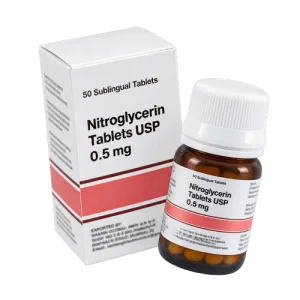
Nitroglycerin is a sublingual tablet for people with angina or chest pain related to myocardial ischaemia when prescribed for that purpose. It dissolves beneath the tongue and is used for rapid…

Guaranteed quality Original product
Delivery: from 4 days Discreet shipping
24/7 Support Always available
Active ingredient: Glyceryl Trinitrate
Select dosage:
Select pack Package Per unit Price
AED 13.13 AED 394.02
AED 10.55 AED 788.04 AED 632.82 Save 20%
Free Regular Delivery AED 9.64 AED 1,182.06 AED 867.64 Save 27%
Free Regular Delivery AED 9.22 AED 1,576.08 AED 1,106.44 Save 30%
Free Express Delivery AED 8.78 AED 2,364.12 AED 1,580.06 Save 33%
Free Express Delivery AED 8.48 AED 3,546.18 AED 2,288.50 Save 35%
Best value Free Express Delivery AED 8.32 AED 4,728.24 AED 2,996.94 Save 37%
AED 13.66 AED 409.94
AED 10.81 AED 819.88 AED 648.74 Save 21%
Free Regular Delivery AED 9.86 AED 1,229.82 AED 887.54 Save 28%
Free Regular Delivery AED 9.35 AED 1,639.76 AED 1,122.36 Save 32%
Free Express Delivery AED 8.89 AED 2,459.64 AED 1,599.96 Save 35%
Free Express Delivery AED 8.58 AED 3,689.46 AED 2,316.36 Save 37%
Best value Free Express Delivery AED 8.42 AED 4,919.28 AED 3,032.76 Save 38%
AED 3.34 AED 83.58
AED 3.18 AED 167.16 AED 159.20 Save 5%
Best value AED 3.13 AED 250.74 AED 234.82 Save 6%

Free delivery on orders from AED 796.00, free express delivery from AED 1,194.00

Secure payment methods:
VISA AMEX JCB DISCOVER

Nitroglycerin is a sublingual tablet for people with angina or chest pain related to myocardial ischaemia when prescribed for that purpose. It dissolves beneath the tongue and is used for rapid relief, prevention before a known trigger, or temporary symptom relief while urgent cardiac assessment is arranged.

Overview

Nitroglycerin belongs to the nitrate group of cardiovascular medicines. The product is a sublingual tablet intended to dissolve beneath the tongue rather than being swallowed whole.

What it is used for

Doctors use sublingual Nitroglycerin mainly for:

  • Rapid relief of an established angina attack.
  • Prevention of predictable angina before exertion or another known trigger.
  • Short-term control of chest pain related to myocardial ischaemia, when prescribed for that purpose.
  • Temporary symptom relief while urgent cardiac assessment is arranged.

Angina occurs when the heart muscle needs more oxygen than the coronary circulation can provide. The discomfort may feel like pressure, tightness, squeezing, heaviness, or burning in the chest. Pain can spread to the arm, shoulder, neck, jaw, or back.

Core Indications in Cardiovascular Care

Nitroglycerin treats the symptom of myocardial ischaemia; it does not remove a blocked coronary artery. New, severe, prolonged, or changing chest pain requires emergency assessment because a heart attack can resemble ordinary angina.

Keep the prescribed sublingual tablets accessible during activities that have previously triggered angina. A tablet buried in luggage, a desk drawer, or a locked vehicle cannot provide timely relief.

Patients should sit down before using a sublingual dose. Light-headedness can occur as blood vessels widen, and standing quickly increases the chance of fainting.

Formulation

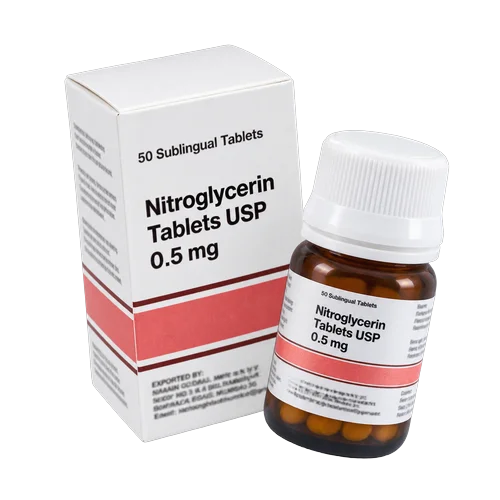
The product is a sublingual tablet containing Nitroglycerin, intended to dissolve beneath the tongue rather than being swallowed whole. How much to use and how often depends on the purpose of use and is agreed with a doctor or pharmacist.

Mechanism of action

Nitroglycerin acts as a nitric oxide donor. Inside vascular smooth muscle, it is converted into signalling molecules that increase cyclic guanosine monophosphate, often shortened to cGMP. This signal relaxes smooth muscle in the blood-vessel wall.

The main effects are:

  • Venous dilation, which lowers the amount of blood returning to the heart.
  • Reduced ventricular filling pressure, lowering cardiac preload.
  • Some arterial dilation, which can reduce the resistance against which the heart pumps.
  • Improved balance between myocardial oxygen supply and oxygen demand.

This process reduces cardiac workload. It can also improve coronary blood flow in areas affected by vessel narrowing or spasm. The medicine does not create a sustained increase in exercise capacity by itself, and relief of pain does not prove that the underlying coronary disease has resolved.

Nitroglycerin’s mechanism and sublingual use are described in FDA prescribing information [1].

How to use it

  • Dose: Each sublingual tablet contains 0.5 mg of Nitroglycerin; the number of tablets to use is agreed with a doctor or pharmacist.
  • Frequency: How often to use it, including the number of times per day, depends on the purpose of use and is agreed with a doctor or pharmacist.
  • Timing: Use for rapid relief of an established angina attack, prevention before exertion or another known trigger, short-term control of prescribed chest pain related to myocardial ischaemia, or temporary symptom relief while urgent cardiac assessment is arranged. Timing in relation to meals is not specified.
  • Duration: The duration of use depends on the purpose of use and is agreed with a doctor or pharmacist.
  • Route: Place the prescribed tablet beneath the tongue and allow it to dissolve; do not swallow it whole.
  • Seek urgent medical assessment for persistent or concerning chest pain.

Comparison

Nitroglycerin differs from long-term anti-anginal treatment because the sublingual tablet is designed for rapid symptom management. Other approaches may reduce the frequency of attacks but are not interchangeable during an acute episode.

Approach Main role
Sublingual nitroglycerin Rapid relief or planned prevention of angina
Long-acting nitrate therapy Prevention of recurrent angina over a longer period
Beta-blocker therapy Reduction of heart rate and myocardial oxygen demand

Long-acting nitrates require a planned nitrate-free interval in many treatment schedules because continuous exposure can reduce the response. Beta-blockers work through a different mechanism and may be unsuitable for people with certain conduction, airway, or circulation problems. The choice depends on blood pressure, heart rate, coronary anatomy, other illnesses, and the medicines already being used.

Nitroglycerin does not replace emergency treatment for suspected myocardial infarction. Symptom relief can occur during a serious cardiac event, so improvement alone should not be used to decide that urgent care is unnecessary.

Common mistakes

Several practical errors reduce the benefit or increase the danger of sublingual Nitroglycerin:

  • Swallowing the tablet immediately instead of letting it dissolve.
  • Taking it while standing or walking.
  • Repeating doses without following the emergency plan.
  • Using it after sildenafil, tadalafil, or another PDE-5 inhibitor.
  • Keeping tablets in a humid bathroom or hot vehicle.
  • Transferring the tablets into another container.
  • Assuming relieved pain rules out a heart attack.
  • Driving to hospital alone after severe or persistent chest pain.
  • Failing to tell emergency clinicians about nitrate use.

One frequent misunderstanding involves tolerance. Long-acting nitrate schedules may require a nitrate-free period, while acute sublingual use follows a different plan. Patients should not create their own nitrate-free interval for a medicine intended to treat active angina.

Another mistake is using an old bottle that has been repeatedly exposed to moisture. A tablet that looks unchanged may still have reduced reliability after poor storage.

Who should not use it

Nitroglycerin is not for you if you have any of the following:

  • Current use of a PDE-5 inhibitor such as sildenafil, tadalafil, vardenafil, or avanafil.
  • Recent use of a PDE-5 inhibitor when its effect may still be present.
  • Use of riociguat or another soluble guanylate cyclase stimulator.
  • Severe low blood pressure, shock, or circulatory collapse.
  • Severe anaemia or known methemoglobinaemia.
  • Raised intracranial pressure, including certain brain injuries or cerebral haemorrhage.
  • A known allergy to nitroglycerin or another nitrate.
  • Suspected right-sided acute myocardial infarction with significant dependence on preload, unless managed by a specialist team.

The interaction with PDE-5 inhibitors can cause a dangerous and sudden fall in blood pressure. The same concern applies to recreational or prescribed medicines that enhance nitric oxide signalling. The FDA identifies nitrate–PDE-5 inhibitor interaction as a major contraindication [2].

When this is not for you

Tell the treating clinician about all medicines used for erectile dysfunction, pulmonary hypertension, blood pressure, migraine, depression, pain, or sleep. Alcohol can intensify dizziness and hypotension. Other vasodilators, diuretics, and antihypertensive medicines may also increase the blood-pressure effect.

Pregnancy and breastfeeding require an individual risk assessment. The decision depends on the cardiovascular condition, alternatives, and the urgency of treatment. Children and adolescents should not use this product unless a specialist has prescribed it for a specific indication.

Unwanted effects

Headache is the most recognised adverse effect of nitrate treatment. It results from blood-vessel dilation and may be throbbing, especially soon after a dose. Dizziness, flushing, weakness, nausea, and a temporary fall in blood pressure can also occur.

Side effects are more likely when:

  • The person is dehydrated.
  • The dose is taken while standing.
  • Alcohol is consumed at the same time.
  • Other blood-pressure-lowering medicines are being used.
  • The person is older or prone to falls.

A mild headache may lessen as the body becomes accustomed to treatment, but a severe or persistent headache requires medical advice about the treatment plan. Do not stop prescribed cardiovascular treatment abruptly without a clinician’s direction.

Serious reactions need urgent assessment. These include fainting, collapse, severe shortness of breath, blue or grey skin, marked confusion, very slow or rapid heartbeat, or chest pain that does not improve.

One practical detail is easy to miss: blood-pressure symptoms can appear before a patient feels a dramatic change in chest pain. Sitting down before administration helps reduce injury from a sudden fall.

Avoid driving, climbing, or operating machinery immediately after a dose until you know whether dizziness or blurred vision occurs. A brief blood-pressure drop can impair balance even when chest discomfort is improving.

What doctors say

In clinical practice, doctors treat Nitroglycerin as an emergency symptom medicine within a wider coronary-care plan. It can relieve angina quickly, yet it does not prevent plaque progression, dissolve a clot, or substitute for investigation of worsening symptoms.

A cardiologist will usually clarify three separate points:

  • The exact symptoms that count as the patient’s typical angina.
  • The number of doses allowed during one episode.
  • The point at which emergency help must be called.

Regular need for Nitroglycerin can signal that coronary disease is becoming less controlled. A person who previously used it rarely but now needs it more often should report that change promptly. The clinician may reassess blood pressure, heart rate, exercise tolerance, adherence, and the need for additional cardiovascular treatment. A change in pattern can require review even when each episode responds. Treatment decisions should account for symptom frequency and the risk of hypotension.

The therapeutic goal is predictable symptom control without fainting, severe headache, or unsafe hypotension. Dose increases are not a substitute for reassessment when the pattern of chest pain changes.

What customers often ask

What should I do after a missed Nitroglycerin dose or application?

For a planned preventive dose, use the prescribed dose when remembered only if the triggering activity has not yet occurred and there is adequate time for the planned effect. Do not take extra tablets to compensate for a missed dose. FDA sublingual nitrate guidance reviewed in 2024 supports urgent assessment when active chest pain persists despite the prescribed first dose.

How does Nitroglycerin differ from the closest alternative?

Nitroglycerin releases nitric oxide and relaxes vascular smooth muscle, while beta-blockers reduce heart rate and cardiac oxygen demand through beta-adrenergic blockade. The two approaches may be used in the same cardiovascular plan, but they are not interchangeable for sudden angina. The European Medicines Agency’s cardiovascular medicine information reviewed in 2023 supports selecting treatment according to mechanism, haemodynamics, and the patient’s clinical condition.

What should I do if the expected result does not come?

Stop exertion, remain seated, and follow the prescribed emergency dosing plan. Chest pain that continues after the first dose, worsens, or differs from the established pattern requires emergency help rather than repeated self-treatment. WHO cardiovascular-care guidance published in 2023 treats persistent suspected cardiac ischaemia as an urgent clinical problem.

How should Nitroglycerin be stored at home and while travelling?

Keep the tablets in their tightly closed dark glass container, protected from heat, sunlight, and moisture. Do not transfer them to a pill organiser or leave them in a parked vehicle. MOHAP medicine-safety guidance current in 2025 supports carrying essential cardiovascular medicines in accessible hand luggage during travel.

Can Nitroglycerin be used by anyone under 18?

Routine self-use in people under 18 is not appropriate. Paediatric cardiovascular conditions require specialist assessment because the cause of chest pain, dose selection, and haemodynamic response may differ from adults. The FDA product information reviewed in 2024 supports restricting use to a clinician-directed indication when treatment is considered for a younger patient.

How long does a course last, and is long-term use acceptable?

The duration depends on whether Nitroglycerin is being used for occasional episodes, predictable prevention, or part of a broader coronary-care plan. Repeated or increasing need should trigger medical review rather than automatic continuation without reassessment. EMA cardiovascular pharmacology guidance reviewed in 2023 recognises nitrates as treatments that may be used over time with monitoring for tolerance, hypotension, and changing symptoms.

What should I discuss with a doctor before starting Nitroglycerin?

Discuss all medicines, especially sildenafil, tadalafil, vardenafil, avanafil, riociguat, blood-pressure medicines, and other vasodilators. Mention low blood pressure, fainting, anaemia, glaucoma or raised intracranial pressure, recent head injury, pregnancy, and breastfeeding. MOHAP medication-safety information reviewed in 2025 supports a full interaction and cardiovascular-risk review before nitrate treatment begins.

Do you offer anonymous delivery?

Your order will be securely packed and shipped within 24 hours. This is exactly what your package will look like (images of an actual item sent). It has the size and look of a regular private letter (24x11x0.7 cm) and its contents cannot be seen.

Comparison

Angina: all medicines side by side

Medication Storage and Handling Guidelines

Sublingual nitroglycerin tablets are sensitive to heat, moisture, and loss of container protection. Keep them in the tightly closed dark glass bottle supplied for the product, away from bathrooms, car interiors, direct sunlight, and kitchen steam.

Good storage practice includes:

  • Keep the bottle closed between doses.
  • Store it at a stable room temperature.
  • Avoid transferring tablets into a weekly pill organiser.
  • Keep the bottle away from children and visitors.
  • Replace the cap immediately after taking a tablet.
  • Carry the medicine in its protective container when travelling.

Do not store the tablets loose in a pocket, wallet, or unsealed plastic bag. Moisture and repeated exposure to air can reduce reliability. FDA product information describes the need for appropriate container closure and protection from environmental exposure [3].

Before travelling, place the bottle in hand luggage rather than checked baggage. Aircraft holds and parked vehicles can expose medicines to temperature extremes, while checked bags may be inaccessible during an angina episode.

Customer Feedback on Nitroglycerin

Based on 5 reviews

Suresh A., 27 Verified
Rating: 3 out of 5

The tablet dissolved quickly and the pressure eased, but I felt light-headed for several minutes. Sitting down first made a noticeable difference.

Kalba One prescribed 0.5 mg tablet during one exertional episode 30 Sep 2026
Zubair N., 27 Verified
Rating: 3.5 out of 5

I expected the headache. The chest discomfort improved, although the headache was strong enough that I stayed resting instead of returning to work.

Mirdif Several weeks 7 Oct 2026
Majid A., 30 Verified
Rating: 3 out of 5

The medicine helped during a familiar episode, but I later needed urgent review because the attacks were happening more often. Relief did not solve the underlying problem.

Al Dhaid Several months 13 Oct 2026
Daniel, 60 Verified
Rating: 5 out of 5

It worked within minutes for my usual angina. I had one episode where the pain continued, and calling emergency services was the right decision.

Dibba Al-Fujairah Several months 23 Oct 2026
Tariq, 56 Verified
Rating: 3 out of 5

The first doses were useful, but I had kept the bottle in a hot car. My clinician told me to replace it and keep future tablets in a cool, closed container.

Al Reem Island Several weeks 28 Oct 2026

Sources

  1. U.S. Food and Drug Administration (2024). Nitroglycerin Sublingual Tablets USP Prescribing Information
  2. U.S. Food and Drug Administration (2024). Nitrate Medicines and Phosphodiesterase-5 Inhibitor Interaction Information
  3. National Library of Medicine (2024). Nitroglycerin Sublingual: Medication Information
Get our free app Shop faster and track your orders 3.4 · 316 reviews Install