My facial pressure eased after several days. The tablets caused loose stools in the first week, and taking them with meals made my stomach more settled.
Al Nahda 7 days 22 Oct 2026
Augmentin
Augmentin is used for adults and children when a susceptible bacterial infection needs treatment. Its amoxicillin component attacks bacterial cell walls, while clavulanate potassium helps protect…
Augmentin is used for adults and children when a susceptible bacterial infection needs treatment. Its amoxicillin component attacks bacterial cell walls, while clavulanate potassium helps protect amoxicillin from certain resistance enzymes.
Overview
Augmentin combines amoxicillin with clavulanate potassium to treat susceptible bacterial infections. It is prescribed for adults and children with conditions such as sinusitis, pneumonia, urinary infections, ear infections, and dental abscesses. The combination attacks bacterial cell walls while protecting amoxicillin from certain beta-lactamase enzymes.
What it is used for
Augmentin is used when a clinician suspects or confirms a bacterial infection that is susceptible to the amoxicillin–clavulanate combination. The choice depends on the infection site, local resistance patterns, previous antibiotic exposure, kidney function, allergy history, and the likely organism [2].
Common clinical uses include:
- Sinusitis: selected bacterial sinus infections, especially when symptoms persist, worsen after initial improvement, or show features that make bacterial disease more likely.
- Pneumonia: certain community-acquired bacterial respiratory infections.
- Urinary tract infections: susceptible infections involving the bladder or other parts of the urinary tract.
- Ear infections: bacterial middle-ear infections where the combination is clinically appropriate.
- Skin infections: selected infections involving skin and soft tissue.
- Bronchitis: only when a bacterial cause is suspected; most acute bronchitis is viral and does not require an antibiotic.
- Dental abscess: bacterial dental infections, usually alongside dental treatment to address the source.
A dental abscess may require drainage or other dental procedures. An antibiotic alone may reduce bacterial spread without removing the infected tooth, diseased gum tissue, or collection of pus.
Respiratory symptoms need careful assessment. Thick mucus or a cough alone does not prove that bacteria are responsible.
Formulation
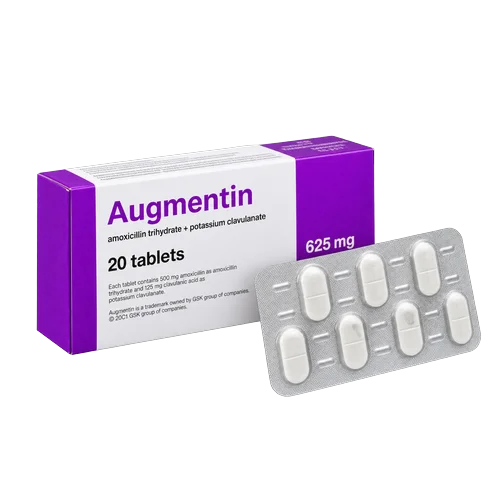
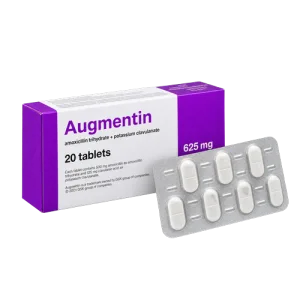
Augmentin tablets contain amoxicillin trihydrate and potassium clavulanate. The stated tablet strength is 625 mg, and the pack contains 20 tablets. Amoxicillin belongs to the penicillin family of beta-lactam antibiotics, while clavulanate protects amoxicillin against some bacterial resistance enzymes [1].
| Component | Pharmacological role | Clinical contribution |
|---|---|---|
| Amoxicillin trihydrate | Penicillin antibiotic | Disrupts susceptible bacterial cell-wall formation |
| Potassium clavulanate | Beta-lactamase inhibitor | Helps protect amoxicillin from selected bacterial enzymes |
Role of Amoxicillin
Amoxicillin blocks enzymes that bacteria need to build and maintain their cell walls. This weakens the bacterial structure and can lead to bacterial death when the organism is susceptible. Amoxycillin is another spelling used for the same active antibiotic substance in some medical references.
The antibiotic does not treat viral illnesses such as uncomplicated colds or influenza. Using it for a viral infection exposes the person to adverse effects without targeting the cause.
Role of Clavulanate Potassium
Some bacteria produce beta-lactamase enzymes that can break down certain penicillin antibiotics. Clavulanate binds to selected beta-lactamases and reduces their ability to inactivate amoxicillin.
Clavulanate does not replace amoxicillin. It supports the antibiotic component by widening activity against bacteria that might resist amoxicillin alone.
Mechanism of action
Augmentin works through two linked pharmacological actions. Amoxicillin interferes with penicillin-binding proteins involved in bacterial cell-wall construction. Clavulanate inhibits certain beta-lactamase enzymes that would otherwise break down amoxicillin before it reaches its bacterial target [3].
The combination does not overcome every form of antibiotic resistance. Bacteria may resist through altered penicillin-binding proteins, reduced drug entry, active drug efflux, or beta-lactamases that clavulanate does not adequately inhibit.
Antibiotic resistance develops when susceptible bacteria are removed while resistant organisms survive and multiply. Unnecessary treatment, incorrect dosing intervals, and stopping treatment without clinical direction can contribute to poor antibiotic use.
How to use it
Augmentin tablets are taken by mouth. Dosing differs between strengths and between users, so there is no single amount that suits everyone. The correct number of tablets, interval, and treatment length depend on the prescribed strength, infection, age, kidney function, and clinical response.
Use the prescribed dose at evenly spaced times. Complete the prescribed course unless the treating clinician changes the plan because of an adverse reaction, a test result, or another clinical reason.
Practical administration points include:
- Swallow the tablet with water.
- Take it with food or at the start of a meal when possible.
- Keep doses separated as evenly as the prescribed schedule allows.
- Do not double the next dose after forgetting one.
- Take a missed dose when remembered unless the next dose is due soon; in that case, skip the missed dose and return to the regular schedule.
- Do not split, crush, or chew the tablet unless a prescriber or pharmacist has specifically confirmed that this is suitable for the supplied formulation.
A common mistake is taking doses only when symptoms feel troublesome. Antibiotic concentrations can fall between irregular doses, while symptoms may improve before the infection has fully resolved.
Kidney impairment can require a different formulation, dose, or interval. Children may need weight-based dosing and a different dosage form. Augmentin tablets should not be used as a substitute for a child-specific prescription.
Comparison
Augmentin Compared With Other Antibiotic Approaches
| Approach | Main mechanism | Clinical distinction |
|---|---|---|
| Amoxicillin alone | Blocks bacterial cell-wall synthesis | Suitable when the suspected bacteria do not produce relevant beta-lactamase enzymes |
| Amoxicillin plus clavulanate | Cell-wall inhibition plus beta-lactamase inhibition | Used when broader coverage against susceptible beta-lactamase-producing bacteria is needed |
| Macrolide-class antibiotic | Acts mainly on bacterial protein synthesis | Used in selected situations, including some penicillin-allergy pathways, according to local guidance |
The broader spectrum of Augmentin can be useful, but broader coverage also increases exposure to gastrointestinal adverse effects and antibiotic selection pressure. A wider spectrum is not automatically better for every infection.
Common mistakes
Several practical mistakes can reduce treatment quality or increase adverse effects:
- Taking tablets on an empty stomach despite repeated nausea.
- Taking doses at random times rather than keeping the prescribed interval.
- Doubling a dose after forgetting one.
- Stopping treatment solely because fever or pain improves.
- Sharing tablets with a family member who has similar symptoms.
- Using Augmentin for influenza, a common cold, or another likely viral illness.
- Ignoring watery diarrhoea or blood in the stool.
- Failing to mention warfarin, methotrexate, probenecid, or a previous penicillin allergy.
- Continuing treatment despite facial swelling, breathing difficulty, or a blistering rash.
- Assuming a dental abscess has been cured when the infected tooth still needs dental treatment.
One easily missed detail is the delayed liver reaction. Jaundice can develop after treatment has ended, so the timing of symptoms matters when describing the reaction to a clinician.
Who should not use it
Augmentin is not suitable for you if you have had a severe immediate allergic reaction to penicillin, amoxicillin, clavulanate, or another beta-lactam antibiotic. It is also unsuitable if you previously developed jaundice or significant liver dysfunction specifically associated with amoxicillin–clavulanate.
Extra caution is required with:
- A history of severe antibiotic-associated colitis.
- Liver disease or previous abnormal liver tests during antibiotic treatment.
- Kidney impairment.
- Suspected glandular fever, where an amoxicillin-associated rash may occur.
- Pregnancy or breastfeeding, where the indication and treatment choice should be assessed individually.
- Concurrent warfarin, methotrexate, probenecid, or other medicines requiring monitoring.
When this is not for you
Do not take Augmentin if you have ever had a severe allergic reaction to penicillin, amoxicillin, clavulanate, or another beta-lactam antibiotic. Tell a clinician before treatment if an earlier course caused yellowing of the skin or eyes or serious liver problems.
You may need a different medicine or closer monitoring if you have liver disease, kidney problems, severe antibiotic-associated diarrhoea, suspected glandular fever, or take warfarin, methotrexate, probenecid, or other medicines requiring monitoring.
Stop and seek urgent medical attention for breathing difficulty, swelling of the face or throat, faintness, blistering skin, peeling skin, or a rapidly spreading rash.
Unwanted effects
Digestive symptoms are among the most frequent problems with amoxicillin–clavulanate. Diarrhoea, nausea, vomiting, abdominal discomfort, and indigestion may occur. Taking the tablet with food can help with nausea, but persistent or severe diarrhoea needs medical assessment [4].
Other possible reactions include:
- Headache or dizziness.
- Skin rash or itching.
- Vaginal or oral thrush caused by changes in normal microorganisms.
- Temporary changes in liver blood tests.
- Rare liver injury, which may cause jaundice, dark urine, pale stools, severe itching, or unusual tiredness.
- Serious allergic reactions, including facial swelling, breathing difficulty, widespread blistering rash, or faintness.
A mild loose stool can occur during antibiotic treatment. Watery diarrhoea, blood or mucus in the stool, fever, severe abdominal pain, or diarrhoea that continues after treatment may indicate antibiotic-associated colitis and requires prompt clinical attention.
A rash during treatment needs context. A rapidly spreading rash, blistering, peeling skin, mouth sores, or swelling of the lips or tongue is an emergency.
Liver-related symptoms can appear during treatment or after the final tablet. This delayed timing is one reason new jaundice or dark urine after a recent course deserves prompt assessment.

What doctors say
In clinical practice, doctors usually focus on three decisions before prescribing Augmentin: whether the illness is bacterial, whether the suspected bacteria are likely to respond, and whether the combination’s broader coverage is justified.
A physician would also assess kidney function, previous penicillin reactions, recent antibiotic exposure, pregnancy status, and medicines such as warfarin or methotrexate. A person who feels better after two days may still need to follow the prescribed plan unless the clinician changes it.
The combination can be useful for selected respiratory, dental, urinary, skin, and ear infections. Its limitations include diarrhoea, possible liver injury, allergic reactions, and the fact that it cannot treat viruses.
What customers often ask
Can Augmentin be taken with warfarin, methotrexate, or supplements?
Augmentin may interact with warfarin, methotrexate, and probenecid, so these combinations require prescriber oversight. The FDA prescribing information available in 2024 describes clinically relevant interaction precautions, including the need to monitor selected patients receiving anticoagulants. WHO antibiotic guidance published in 2023 also supports medication review before treatment, especially when several medicines affect kidney function or clotting.
What is the best time of day to take Augmentin?
The best timing is the schedule prescribed for the individual, with doses spaced as evenly as possible and taken with food or at the start of a meal. NHS antimicrobial guidance available in 2025 supports practical dosing that maintains regular intervals and reduces avoidable stomach upset. Taking a dose with breakfast or another substantial meal can be easier to remember than choosing an arbitrary time.
What happens when Augmentin is stopped, and does it need tapering?
Augmentin is generally stopped after the prescribed course or earlier only when a clinician directs the change because of a reaction, test result, or revised diagnosis. Antibiotics do not usually require tapering, since tapering is used for medicines that need gradual dose reduction after regular exposure. EMA antibiotic information available in 2024 supports completing the prescribed regimen rather than independently shortening or extending treatment.
Can Augmentin affect driving, concentration, or work with machinery?
Augmentin does not usually impair concentration directly, but dizziness, headache, nausea, or an allergic reaction can make driving or machinery work unsafe. The UK Medicines and Healthcare products Regulatory Agency guidance available in 2023 advises caution when a medicine causes symptoms that reduce alertness or coordination. Do not drive if you feel dizzy, faint, confused, or physically unwell after a dose.
Can Augmentin be used during pregnancy or breastfeeding?
Amoxicillin–clavulanate may be prescribed during pregnancy or breastfeeding when the expected benefit justifies treatment for a bacterial infection. The WHO antibiotic resources available in 2023 describe penicillin-class antibiotics as established treatment options in many clinical situations, while the individual indication still determines the choice. Breastfed infants should be observed for diarrhoea, oral thrush, or rash if the nursing parent receives treatment.
Do you offer anonymous delivery?
Your order will be securely packed and shipped within 24 hours. This is exactly what your package will look like (images of an actual item sent). It has the size and look of a regular private letter (24x11x0.7 cm) and its contents cannot be seen.
Comparison
Ampicillin
Augmentin Current
Bactrim
Ciplox
Doxycycline
Minocycline
Sources
- U.S. Food and Drug Administration (2024). Augmentin Prescribing Information
- National Institute for Health and Care Excellence (NICE) (2025). Sinusitis (acute): antimicrobial prescribing
- World Health Organization (2023). The WHO AWaRe Antibiotic Book
- National Institute of Diabetes and Digestive and Kidney Diseases (2020). Amoxicillin-Clavulanate — LiverTox