Skip to content
Fast & Discrete Delivery Save up to 80%
In stock Minocycline
Antibiotics

Minocycline

Minocycline reduces susceptible bacterial growth by blocking protein production inside bacterial cells. It is used mainly for acne and selected bacterial infections in adults and adolescents when…

Guaranteed quality Original product
Delivery: from 4 days Discreet shipping
24/7 Support Always available
Active ingredient: Minocycline
Select dosage:
Select pack Package Per unit Price
AED 17.11 AED 513.42
AED 15.57 AED 770.13 AED 700.48 Save 9%
Free Regular Delivery AED 14.86 AED 1,026.84 AED 891.52 Save 13%
Free Express Delivery AED 14.11 AED 1,540.26 AED 1,269.62 Save 18%
Free Express Delivery AED 13.76 AED 2,053.68 AED 1,651.70 Save 20%
Free Express Delivery AED 13.36 AED 3,080.52 AED 2,403.92 Save 22%
Best value Free Express Delivery AED 13.12 AED 4,620.78 AED 3,542.20 Save 23%
AED 41.79 AED 417.90
Free Express Delivery AED 40.73 AED 1,253.70 AED 1,221.86 Save 3%
Free Express Delivery AED 38.21 AED 2,507.40 AED 2,292.48 Save 9%
Free Express Delivery AED 35.42 AED 3,761.10 AED 3,187.98 Save 15%
Free Express Delivery AED 32.80 AED 5,014.80 AED 3,936.22 Save 22%
Best value Free Express Delivery AED 30.69 AED 7,522.20 AED 5,524.24 Save 27%

Free delivery on orders from AED 796.00, free express delivery from AED 1,194.00

Secure payment methods:
VISA AMEX JCB DISCOVER

Minocycline reduces susceptible bacterial growth by blocking protein production inside bacterial cells. It is used mainly for acne and selected bacterial infections in adults and adolescents when prescribed.

Overview

Oral capsules provide systemic treatment, while the exact dose and duration depend on the condition being treated.

Minocycline belongs to the tetracycline class of antibiotics. It is bacteriostatic, meaning it slows bacterial multiplication rather than directly destroying every bacterial cell.

What it is used for

Its clinical uses include moderate-to-severe inflammatory acne and selected infections caused by susceptible bacteria. Treatment choice depends on the organism, the infection site, local resistance patterns, and the patient’s medical history.

For acne, the benefit develops through two linked effects: suppression of Cutibacterium acnes and reduction of inflammatory activity around blocked follicles. Antibiotics do not correct every cause of acne, so treatment plans may also include topical therapy or a later maintenance strategy.

Formulation

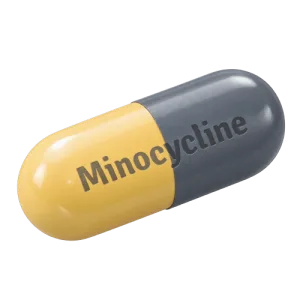
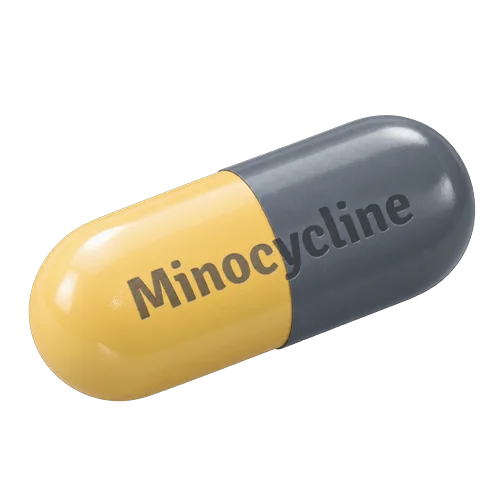
The product is supplied as oral capsules containing minocycline. The active substance is absorbed through the gastrointestinal tract and distributed systemically.

Route and pharmaceutical class

  • Active substance: Minocycline
  • Drug class: Tetracycline antibiotic
  • Dosage form: Oral capsule
  • Route: By mouth
  • Main clinical uses: Acne and selected susceptible bacterial infections
  • Treatment duration: Determined by the prescribing clinician and the condition being treated

Regulatory assessment of minocycline products focuses on active-ingredient quality, oral performance, manufacturing controls, clinical indications, and safety monitoring. The FDA prescribing information describes minocycline as an oral tetracycline with important warnings involving pigmentation, vestibular symptoms, autoimmune reactions, and hypersensitivity [1].

Mechanism of action

The drug binds to the bacterial 30S ribosomal subunit and interferes with the attachment of transfer RNA, which prevents the organism from producing essential proteins. This action lowers bacterial activity and can reduce inflammation linked to acne. This pharmacological effect also depends on bacterial susceptibility and drug exposure at the infection site.

Minocycline is relatively lipophilic compared with some other tetracyclines. That property helps it cross biological membranes and distribute into tissues.

For acne, the benefit develops through two linked effects: suppression of Cutibacterium acnes and reduction of inflammatory activity around blocked follicles.

How to use it

The amount and frequency of Minocycline depend on the purpose of use and are agreed with a doctor or pharmacist. Acne treatment and treatment of a bacterial infection may use different schedules, and the course may change according to clinical response or microbiology results.

  • Swallow the capsule with water.
  • Take doses at evenly spaced times when more than one daily dose is prescribed.
  • Stay upright after taking it.
  • Keep the complete course going unless the prescriber changes the plan.
  • Do not take an extra capsule to compensate for a missed dose.
  • Separate minocycline from iron, calcium, magnesium, aluminium, or zinc products when advised, because these minerals can bind tetracycline antibiotics and reduce absorption.
  • Tell the prescriber about retinoids, anticoagulants, isotretinoin, acne medicines, supplements, and long-term medicines before treatment begins.

A missed dose should generally be taken when remembered unless the next scheduled dose is near. In that situation, skip the missed dose and continue with the planned schedule. Taking two doses close together raises the risk of adverse effects without reliably improving treatment.

Dairy products may reduce absorption in some tetracycline preparations. The exact interaction depends on the formulation, so the timing of milk, yoghurt, calcium-fortified drinks, and mineral supplements should follow the prescribed instructions.

Take each capsule with a full glass of water and remain upright for at least 30 minutes. This reduces the chance of irritation in the throat or oesophagus.
Do not open, crush, or chew the capsule unless a prescriber has specifically authorised an alternative method. Altering the dosage form can change how the medicine is swallowed and may increase local irritation.
A practical way to avoid mineral interactions is to keep antacids, iron tablets, and multivitamins away from the antibiotic dose rather than taking them together at breakfast.

Comparison

Minocycline and doxycycline belong to the same antibiotic class, while azithromycin belongs to a different class. The choice depends on bacterial susceptibility, the treatment goal, previous adverse effects, pregnancy status, and local prescribing guidance.

Treatment approach Main pharmacological distinction Common clinical consideration
Minocycline Tetracycline; inhibits bacterial protein synthesis Useful for selected acne and susceptible bacterial infections; dizziness and pigmentation require attention
Doxycycline Tetracycline; inhibits bacterial protein synthesis Often selected for acne and respiratory or skin infections; sun sensitivity and oesophageal irritation can occur
Azithromycin Macrolide; binds the 50S ribosomal subunit Used for selected infections when a macrolide is appropriate; cardiac rhythm and resistance factors may influence choice

Minocycline is not automatically the best tetracycline for every patient. Doxycycline may be preferred when vestibular effects are a concern, while another antibiotic may be selected when allergy, pregnancy, bacterial resistance, or infection site changes the risk-benefit assessment. NICE acne guidance recommends limiting systemic antibiotic exposure and combining oral antibiotic treatment with suitable topical management rather than using antibiotics as indefinite monotherapy [2].

Common mistakes

Several practical errors can reduce treatment quality or increase avoidable side effects:

  • Taking the capsule immediately before lying down.
  • Swallowing it with only a small sip of water.
  • Taking it together with iron, calcium, magnesium, zinc, or an antacid.
  • Doubling the next dose after forgetting one.
  • Stopping as soon as acne looks slightly better without a treatment review.
  • Continuing leftover capsules for a new infection.
  • Ignoring persistent dizziness because the skin symptoms are improving.
  • Using old capsules for another person or another episode.
  • Failing to mention isotretinoin, anticoagulants, retinoids, or mineral supplements.
  • Assuming that more antibiotic will produce faster acne improvement.
Keep a simple dose record on your phone or calendar. It helps prevent both skipped doses and accidental repeat dosing, especially when the schedule changes.

Who should not use it

Situations requiring avoidance or specialist review

  • Pregnancy, especially later pregnancy, because tetracyclines can affect fetal bone and tooth development.
  • Breastfeeding, where individual assessment is required.
  • Children under eight years of age unless a specialist determines that treatment is justified.
  • Significant liver disease or a history of drug-related liver injury.
  • Previous minocycline-induced lupus, hepatitis, serum sickness, or severe hypersensitivity.
  • Raised intracranial pressure or symptoms suggesting it.
  • Known vestibular disorders that could worsen with dizziness.

Tetracyclines can bind minerals. Calcium, magnesium, aluminium, iron, and zinc may reduce absorption when taken too close to minocycline. Antacids and mineral supplements therefore need planned spacing.

Isotretinoin and other systemic retinoids require special caution because both treatment types have been associated with raised intracranial pressure. Warfarin and related anticoagulants may require closer monitoring because antibiotic therapy can alter anticoagulant response. The prescriber should also review medicines that affect the liver, seizure threshold, or balance.

The WHO AWaRe framework supports careful antibiotic selection and stewardship, which means using an antibiotic only when the suspected or confirmed infection is likely to respond and avoiding unnecessary extension of treatment [3].

When this is not for you

This medication is not for you if you have a serious tetracycline allergy, a previous severe reaction to minocycline, or a condition that makes the prescriber judge the risks unacceptable. Tell the prescriber if you are pregnant or breastfeeding, have significant liver disease, raised pressure in the skull, or a balance disorder. You should also discuss isotretinoin, blood thinners, mineral supplements, and medicines that affect the liver or balance before treatment.

Unwanted effects

Commonly reported reactions include nausea, abdominal discomfort, diarrhoea, headache, dizziness, vertigo, and skin sensitivity. Vestibular symptoms can appear soon after treatment begins and may be more noticeable when standing, turning the head, or travelling in a vehicle.

Skin, nails, teeth, gums, bones, and internal organs can develop blue-grey, brown, or other pigmentation changes during prolonged exposure. Some changes fade after treatment stops, while others can persist. The risk is linked to cumulative exposure and is one reason long-term treatment requires clinical review.

Potentially serious reactions include:

  • Facial swelling, wheezing, blistering rash, or difficulty breathing.
  • Severe headache with visual disturbance, which can signal raised intracranial pressure.
  • Yellowing of the skin, dark urine, or marked abdominal pain, suggesting liver injury.
  • Joint pain, fever, rash, or unusual fatigue associated with autoimmune reactions.
  • Severe watery or bloody diarrhoea during treatment or after completion.
  • New balance problems, faintness, or persistent ringing in the ears.

Minocycline may produce a false-positive urine test for certain drugs, including amphetamine-class substances, in some assay systems. Anyone undergoing workplace, legal, or clinical drug screening should disclose minocycline use before testing.

Stop driving and seek prompt medical assessment for severe headache with blurred vision, facial swelling, breathing difficulty, or a rapidly spreading blistering rash.

What doctors say

In clinical practice, doctors usually assess three points before prescribing minocycline: whether bacteria are contributing to the condition, whether a tetracycline is appropriate, and whether the patient has risk factors for dizziness, pigmentation, liver injury, or autoimmune reactions.

For acne, improvement in inflammatory lesions is gradual. Early reduction in tenderness does not mean that the full treatment response has been reached, and persistent acne after a short period does not automatically mean treatment failure. Prescribers often review the response and then reduce antibiotic exposure when control is achieved.

A physician would also ask about headaches, visual symptoms, balance problems, darkening of the skin or gums, joint pain, and unusual fatigue. These questions are not routine formalities; they target recognised minocycline reactions. The European Medicines Agency places emphasis on benefit-risk assessment and ongoing safety surveillance for medicines with systemic adverse-effect potential [4].

What customers often ask

Can people under 18 use Minocycline?

Minocycline may be prescribed to some adolescents, especially for inflammatory acne, but age, tooth development, pregnancy possibility, and the reason for treatment must be assessed individually. FDA safety information reviewed in 2020 advises caution with tetracyclines during tooth development and recognises risks involving bones and teeth. Children under eight generally require specialist justification because permanent tooth discolouration and enamel effects are concerns.

What is the best time of day to take Minocycline?

There is no single best clock time for every regimen because the schedule depends on the prescribed frequency and treatment purpose. FDA prescribing information from 2020 supports taking oral minocycline with adequate fluid and avoiding conditions that increase oesophageal irritation. Choose times that allow evenly spaced doses and enough water, then keep the timing consistent.

What should be done after a missed dose?

Take the missed dose when remembered unless the next dose is close; skipping the missed dose is preferable to taking two doses together. The FDA medication guidance from 2020 uses this approach to reduce accidental overdosing and avoidable adverse effects. A missed dose should not lead to extending or restarting the course without clinical direction.

Can Minocycline cause dizziness?

Yes, dizziness, vertigo, and balance disturbance are recognised adverse effects of minocycline. FDA safety information from 2020 describes vestibular reactions and supports caution with driving or machinery until the response is known. Severe or persistent symptoms, fainting, new hearing changes, or difficulty walking need prompt medical assessment.

Can Minocycline be taken with food?

Minocycline may be taken with food when stomach upset occurs, although mineral-rich foods and supplements can interfere with absorption. NHS antimicrobial guidance from 2021 advises careful spacing from iron, calcium, magnesium, aluminium, and zinc products. Use water with the capsule and follow the prescribed timing for dairy products or mineral supplements.

Do you offer anonymous delivery?

Your order will be securely packed and shipped within 24 hours. This is exactly what your package will look like (images of an actual item sent). It has the size and look of a regular private letter (24x11x0.7 cm) and its contents cannot be seen.

Comparison

Antibiotics: all medicines side by side

Customer Feedback on Minocycline

Based on 5 reviews

Grace, 49 Verified
Rating: 3 out of 5

The painful spots became less frequent after the first part of treatment. I had mild nausea when I took it without food, so I moved it to a proper meal and drank more water. Dizziness appeared twice but settled quickly.

Madinat Zayed Several weeks 30 Sep 2026
Sara, 65 Verified
Rating: 4.5 out of 5

The infection improved, and I finished the planned course. My stomach felt unsettled for a few days, which was manageable. I found the capsule easier to tolerate when I stayed upright afterwards.

Al Majaz The planned course 8 Oct 2026
Amna K., 32 Verified
Rating: 3.5 out of 5

My skin was calmer after several weeks, especially around my jawline. I did not like the light-headed feeling after the first doses and avoided driving until it stopped. The improvement was useful, but it was not immediate.

Abu Dhabi Several weeks 15 Oct 2026
Rose H., 52 Verified
Rating: 3 out of 5

The treatment helped the inflamed areas, although dryness and occasional nausea were annoying. I also had to separate it from my mineral supplement, which took some planning. My clinician reviewed the response before extending the course.

Sharjah 18 Oct 2026
Layla, 54 Verified
Rating: 2 out of 5

I stopped after a short time because the dizziness made work difficult. The capsules were easy to swallow, but tolerability mattered more than the early skin improvement. A different plan was chosen after review.

Al Khawaneej A short time 27 Oct 2026

Sources

  1. U.S. Food and Drug Administration (2020). Minocycline Hydrochloride Capsules Prescribing Information
  2. National Institute for Health and Care Excellence (2021). Acne vulgaris: management, NICE guideline NG198
  3. World Health Organization (2023). The WHO AWaRe Antibiotic Book
  4. European Medicines Agency (2022). Guideline on the evaluation of medicinal products indicated for treatment of bacterial infections
Get our free app Shop faster and track your orders 3.4 · 316 reviews Install